Key takeaways
- Temperature uniformity means the bath sits at one temperature top to bottom, so the pour temperature is consistent, alloy additions stay evenly dissolved, and a single probe reading can be trusted.
- In a coreless induction furnace the coil wraps the whole crucible so the field heats the entire charge at once, and electromagnetic stirring circulates the melt continuously.
- Uniformity is not fixed. It follows the strength of the stir, which depends on frequency, bath level, applied power, crucible geometry and coil design.
- Temperature can be verified by reading the bath at more than one depth: in a well-stirred furnace the two readings agree. An even bath lowers scrap and holds the metal chemistry in spec. CIME builds coreless furnaces up to 10 MW.
Why bath temperature uniformity matters in melting furnaces
One thing that matters a great deal in melting is a bath that has one temperature, top to bottom and edge to centre, and holds it. A uniform bath allows a consistent metal tapping temperature, keeps alloy additions evenly dissolved, and gives a single, trustworthy reading when the operator dips a probe. A stratified bath does none of these: the top runs hotter than the bottom, a thermocouple reads whatever depth it happens to reach, and the pour temperature drifts as the level drops.
A uniform bath ensures consistent dissolution of the alloying elements and a homogeneous chemical composition throughout the crucible. A 1450 °C set-point means nothing unless it represents the whole bath, not the specific spot the probe touched. That is why a coreless induction melting furnace is designed to deliver temperature uniformity, not just to reach the nominal value. For the principle itself, see how an induction furnace works.
Note
Uniform does not mean cold or slow. A coreless bath can reach a high superheat and still remain uniform, because electromagnetic stirring keeps the same intensity even at high temperatures. Uniformity is about the spread of temperature across the bath, not its absolute value.
A constant temperature is also essential in the CAP pouring furnace
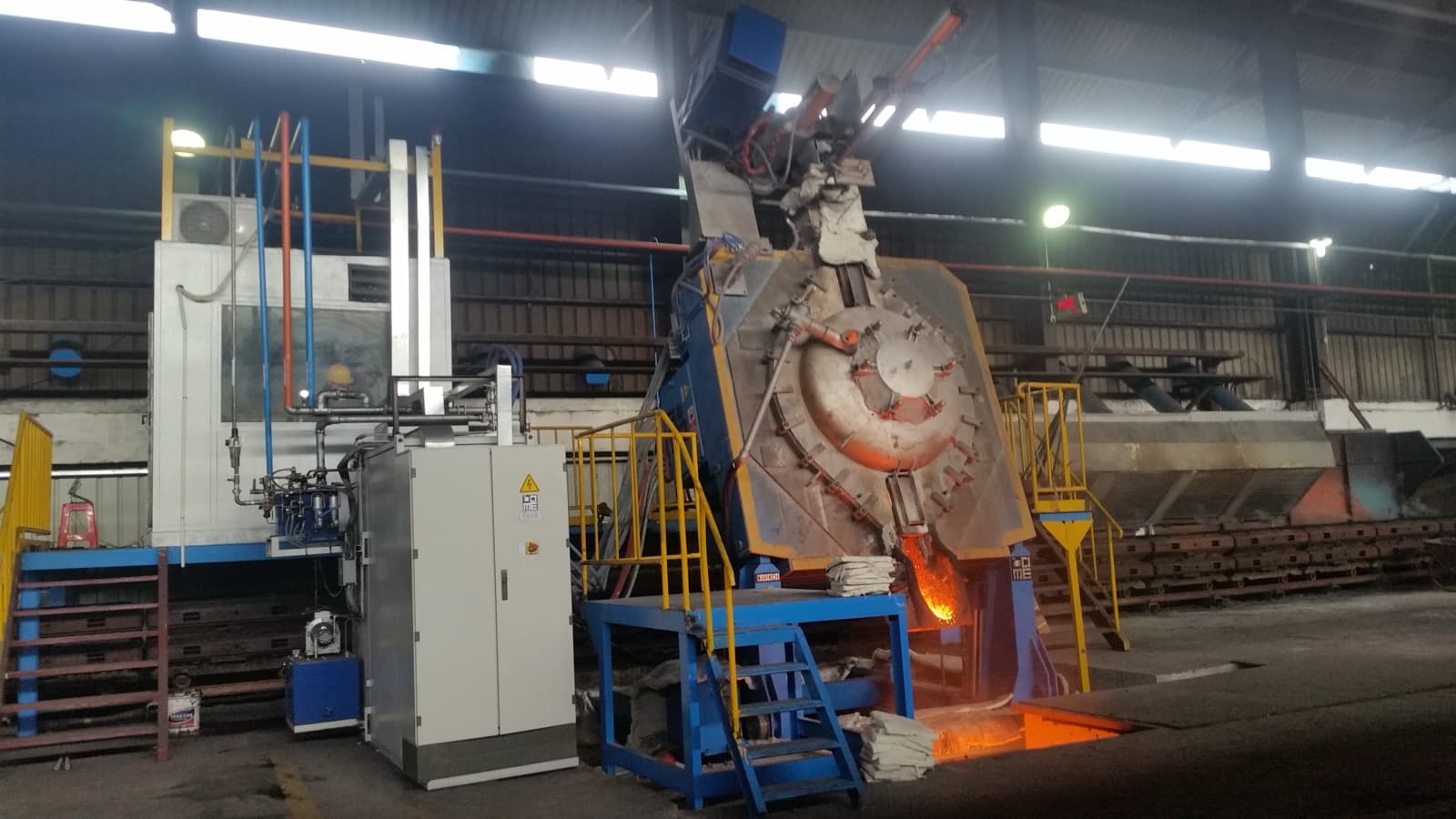
In the CAP coreless (crucible) pouring furnace, the metal stays constantly at the correct pouring temperature, compensating for the swings typical of ladle transport.
This consistency is what everything else depends on: casting soundness, the correct timing of inoculation, the stability of ductile iron chemistry and, more generally, the repeatability of the pour from one mould to the next. A variable temperature, by contrast, introduces variability into each of these factors, with a direct effect on the quality of the cast part.
In ductile iron in particular, thermal stability helps contain magnesium fade, preserving the effectiveness of the treatment right up to the moment of pouring.
The CAP is based on the coreless principle: the coil around the crucible heats the whole metal bath directly, unlike a channel furnace, where heating takes place through an inductor loop with an iron core. The contrast is set out in coreless vs channel induction.
What drives, and what reduces, uniformity
Stirring is not a fixed value. How hard a bath mixes, and therefore how uniform it stays, depends on a few design factors that matter to the melt shop of a foundry.
| Factor | Effect on bath temperature uniformity |
|---|---|
| Electromagnetic stirring | Circulates the whole bath, evening out temperature and composition |
| Frequency | A lower frequency stirs harder and deeper; a higher frequency stirs less and less deeply |
| Bath level | A full furnace stirs and homogenises the whole bath; a furnace with a low metal level has reduced mixing |
| Applied power | Enough power keeps the bath moving; too little lets it stratify |
| Crucible geometry | A sound height-to-diameter ratio helps the stir reach the whole bath |
Two of these deserve a word. Frequency sets the character of the stir: a lower frequency increases the circulating motion of the metal, while a very high frequency moves the bath less. That is why medium-frequency coreless furnaces are able to stir well across a wide range of metals. Bath level is the one operators feel day to day: a furnace that is not recharged often and is run down to a low level loses much of its stirring and efficiency. Keeping the furnace reasonably full, matching power to the load and running a sound coil keep both the stirring and the efficiency effective. For details on CIME coils, see UHE vs. UHP: two structures, two goals.
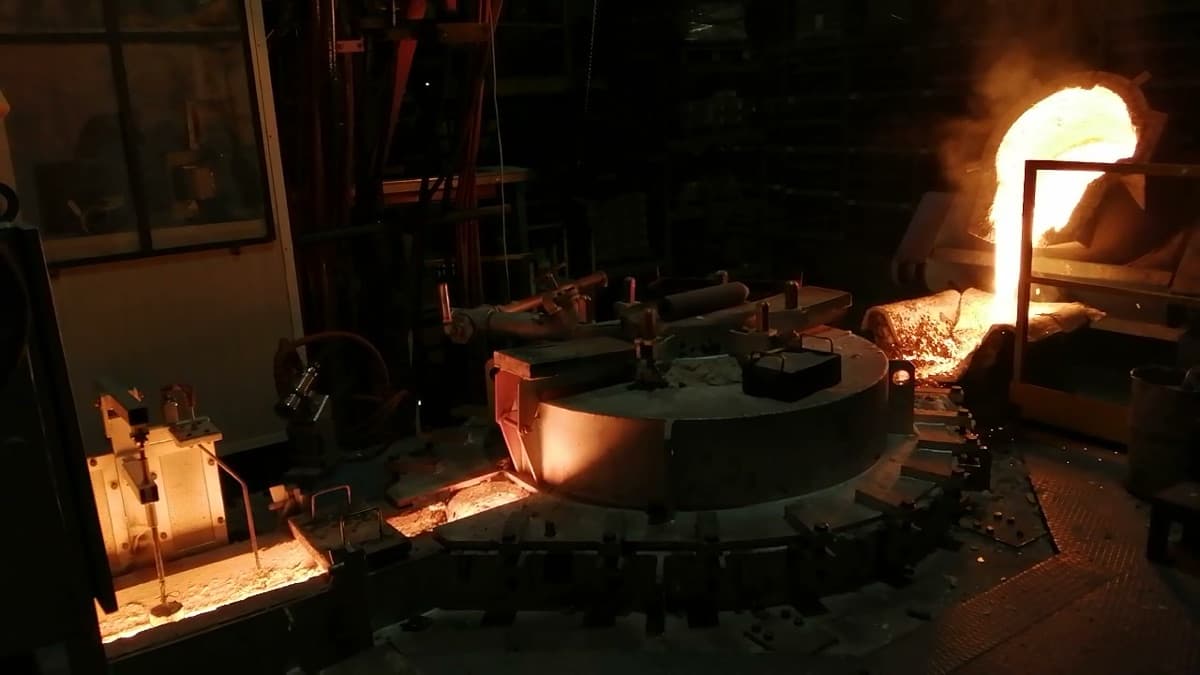
A bath in a coreless furnace does not sit still and hope to even out. The field that melts it also circulates it, so it continuously evens out its own temperature.
Measuring and verifying it
The direct test to verify bath uniformity is to read it at more than one depth: an immersion thermocouple taken near the surface and again lower down should give the same temperature in a well-stirred furnace. An optical pyrometer reads the surface quickly for routine checks, while the immersion probe remains the reference for the bulk of the bath.
A modern CIME melting system meters the power it delivers and monitors the bath; it can hold a constant temperature and flag a drift long before it shows in a bad casting. Temperature control takes regularity: frequent measurements of the bath, checking that the reading at the top matches the one at the bottom, to confirm real uniformity. It is the interpretation of these values over time that makes it possible to anticipate problems: a gradual divergence between the two readings signals that maintenance is needed, before it becomes a problem at the pour.
Why it pays off downstream
A uniform bath is worth the attention because it shapes much of what happens downstream. A pour drawn from a uniform bath fills every mould at the same temperature, reducing scrap from pours that are too cold or too hot. On ductile iron the payoff is sharper still: if the metal comes from a well-mixed bath during melting and is kept just as uniform in the CAP, the chemical treatments and inoculation hold high standards right up to the moment of pouring. The article press pouring vs ladle pouring sets out the differences between pouring with the CAP (automatic pouring furnace) and pouring by ladle.
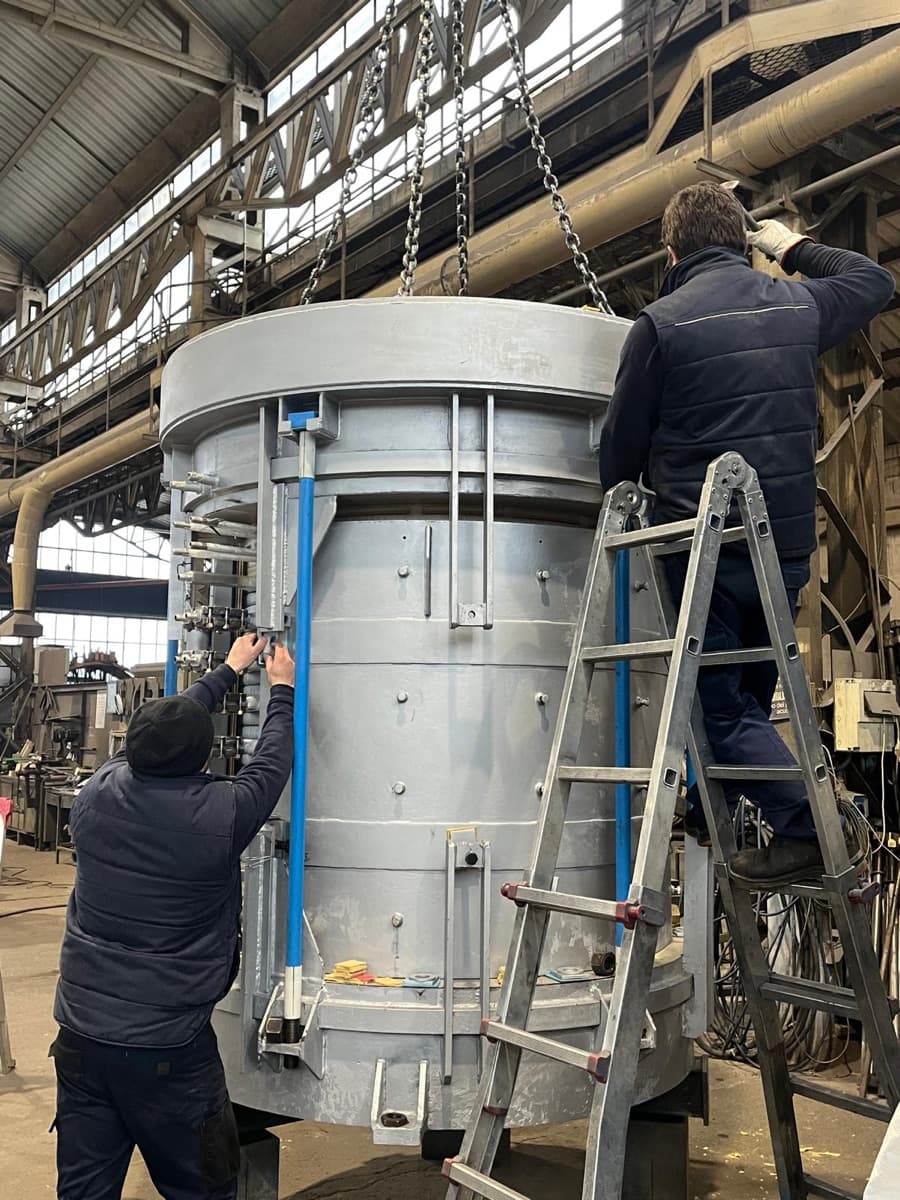
This comes from the way a coreless furnace is built: a coil around the whole crucible, a field that both heats and stirs, and a control system. See the melting furnaces and the core technology for how the coreless platform is engineered around that even bath.
Key point
Bath temperature uniformity, essential to process quality, comes from heating and stirring the whole bath together, and therefore from a furnace kept full and powered steadily.
Frequently asked questions
Why is temperature uniformity important in melting?
Because a uniform bath ensures that alloy additions dissolve evenly throughout the crucible and that the measured temperature truly represents the whole bath, not just the spot the probe reached. A stratified bath (hotter at the surface than at the bottom) gives an unreliable temperature reading and an uneven chemical composition. What follows downstream, at the pour, then depends on a separate system (CAP or ladle), but it starts here: with an evenly melted bath.
How does a coreless induction furnace keep temperature uniform?
In two reinforcing ways. The coil wraps the whole crucible, so the magnetic field heats the entire charge at once rather than a surface or a channel throat. And the same field stirs the metal: electromagnetic stirring circulates the bath continuously, mixing temperature and composition. Together they hold the bath at one temperature throughout. Depending on the frequency, the bath can be mixed more or less. CIME studies and designs the right solution for your metal.
What is electromagnetic stirring?
It is the movement the magnetic field induces in the molten metal. The induced currents in the bath and the coil field together produce a force that sets the melt circulating, rolling it from the walls to the centre and from top to bottom. That constant motion mixes the bath on its own, evening out temperature and dissolving additions.
What reduces temperature uniformity in an induction furnace?
Anything that weakens the stir. Running the furnace down to a low bath level loses much of the stirring, so the last of a melt is less uniform than a full bath. Too little applied power lets the bath stratify, a very high frequency stirs the metal less, and a poor crucible geometry keeps the motion from reaching the whole bath. Keeping the furnace reasonably full and matching power to the load keep it even.
How do you measure bath temperature uniformity?
Read the bath at more than one depth. An immersion thermocouple taken near the surface and again lower down should give the same temperature in a well-stirred furnace. An optical pyrometer reads the surface for quick checks, while the immersion probe stays the reference for the whole bath.
References and sources
- Foundry Trade Journal, technical article on coreless induction melting practice, 2006.
- Cast Metal Times, coreless induction and electromagnetic stirring, 2004.
- CIME S.r.l., internal process and engineering documentation on coreless melting, Turin.