Sustainability · Energy transition · Pillar E
Energy is your
second-largest cost.
We engineer it down.
In a foundry, melting energy is one of the largest cost lines, and it is the one regulation is closing in on fastest. Every design decision we make, from coil geometry to converter electronics, is aimed at the same outcome: fewer kilowatt-hours per ton melted and a plant that stays compliant as the rules tighten. This is not a green statement bolted onto a catalogue. It is how the technology is built.
The efficiency case: UHP and UHE coil design, IGBT converters.
The kilowatt-hours you do not spend are the cheapest decarbonization there is.
Efficiency is the foundation of every sustainability claim that follows, because every kWh you avoid is a kWh you never have to generate and pay for.
CIME builds furnaces on Ultra High Efficiency (UHE) and Ultra High Power (UHP) coil design, pairing high installed power with low losses across the melt cycle to drive kWh per ton down. The power side runs on modern IGBT converters rather than legacy SCR, which raises power factor, sharpens furnace control, and reduces wasted energy across the whole installation.
Less energy per ton means less CO2 per ton.
The decarbonization math is direct.
Coreless induction melting is an electric process: its carbon footprint depends on how much energy each ton melted takes, and on how clean the electricity behind it is.
CIME acts on the first variable directly, through UHE and UHP coil efficiency and IGBT power control, lowering the energy intensity of every melt. As foundries shift toward renewable and lower-carbon electricity, an already efficient furnace amplifies that progress. Cutting energy per ton is the most controllable decarbonization lever a foundry owns, and it pays for itself in the meter, not just in the report.
- 1
Energy per ton
The variable CIME controls directly, lowered through UHE and UHP coil efficiency and IGBT power control.
- 2
Grid carbon intensity
As your electricity gets cleaner, an already efficient furnace compounds the gain rather than wasting it.
Built for a shifting regulatory landscape
Efficiency is becoming a compliance and competitiveness question, not a preference.
The EU Green Deal and CBAM are turning the carbon intensity of metal into a financial and regulatory variable.
European regulation is changing the rules of the game. Under the Green Deal and CBAM, the carbon intensity of metal is no longer just a technical figure: it is a factor that weighs on competitiveness and market access. CIME engineers equipment for exactly that scenario. A more efficient furnace, melting more tons per kilowatt-hour consumed, helps a foundry cut the embedded emissions it has to account for and be ready, rather than scrambling, when regulatory thresholds tighten.
Power converters ready for the hydrogen transition.
Powering what comes after the grid as we know it.
The energy transition will not stop at greener electricity, and CIME is engineering for what comes next.
The know-how developed in power electronics for coreless induction now applies to powering electrolysers for green-hydrogen production and to BESS (Battery Energy Storage Systems), with converters from 2 to 20 MW. It is the same conversion and control expertise that drives our melting furnaces, applied to new industrial fields.
The greenest furnace is often the one you already have.
The most sustainable way to innovate is not always to start from scratch.
A new installation carries an environmental cost from its own manufacture. Often the most sustainable choice is not to replace, but to upgrade what is already running.
CIME works on existing installations with SCR to IGBT conversions, melting-group overhauls, and power converter upgrades, improving energy efficiency (kWh per ton) and extending the working life of the system. The result is a path of continuous improvement: act now on the plant you already run, and plan any replacement for when it makes strategic sense.
SCR to IGBT retrofitIGBT vs SCR · why IGBT wins
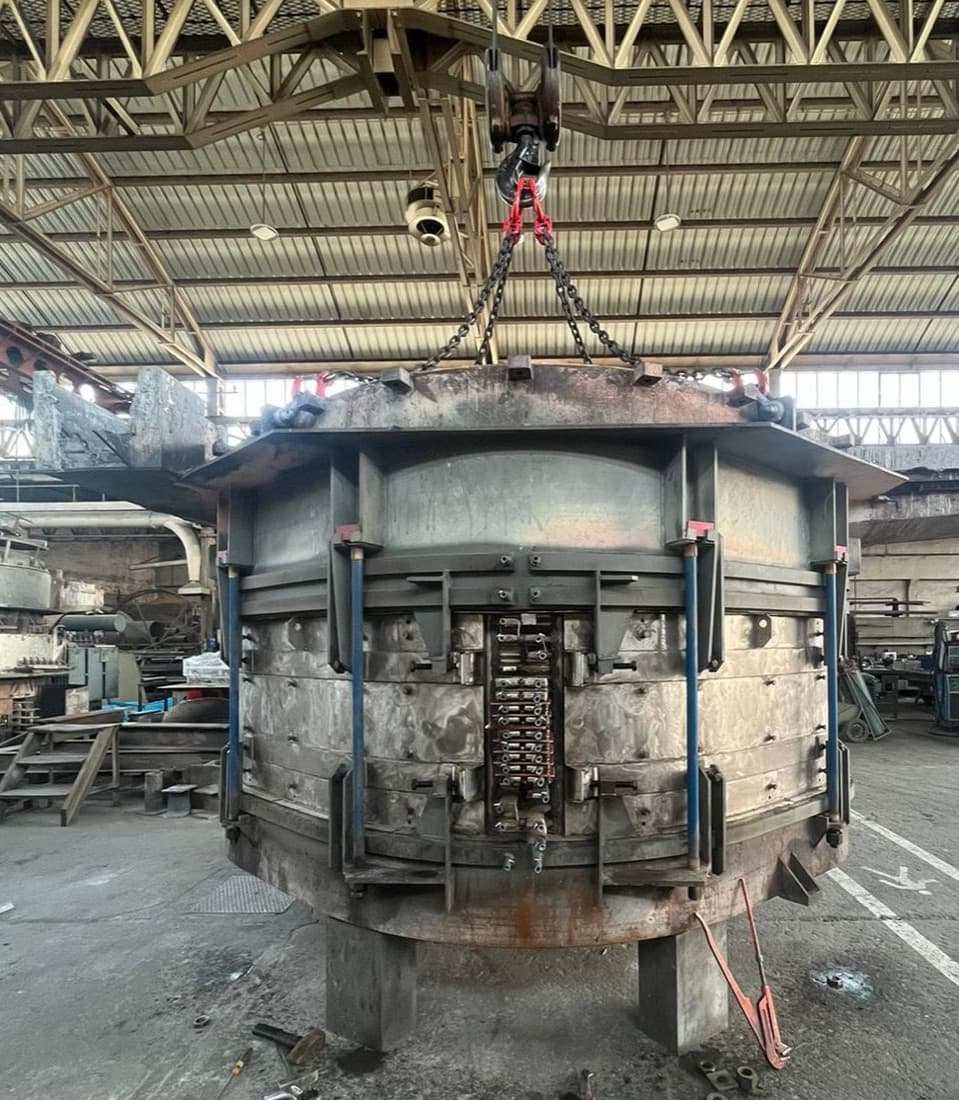
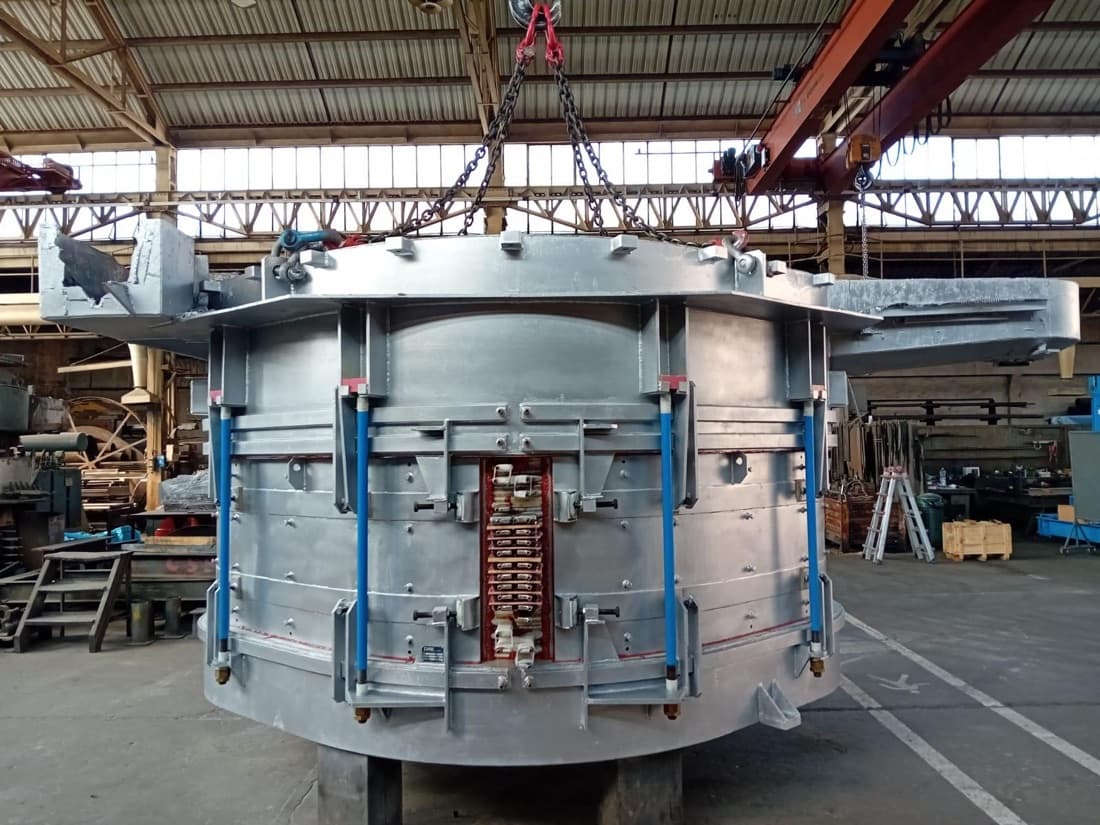
Lifecycle in practice · a CAP 25 refit
Re-engineered, not replaced.
Same furnace body, brought back to as-new: new clamping, a refreshed coil pack, and a full repaint. The lowest-carbon upgrade is often the one that reuses what you already own.
Put a number on your energy and carbon savings.
Whether you are modeling kWh per ton for a technical review, defending embedded-carbon exposure under CBAM, or weighing a retrofit against a replacement, CIME engineers can size the efficiency case against your actual operation. Bring your melt profile: we will study it and show you where UHE and UHP design, IGBT conversion, and lifecycle upgrades move the numbers. No commodity quote, an engineered answer to your energy transition.