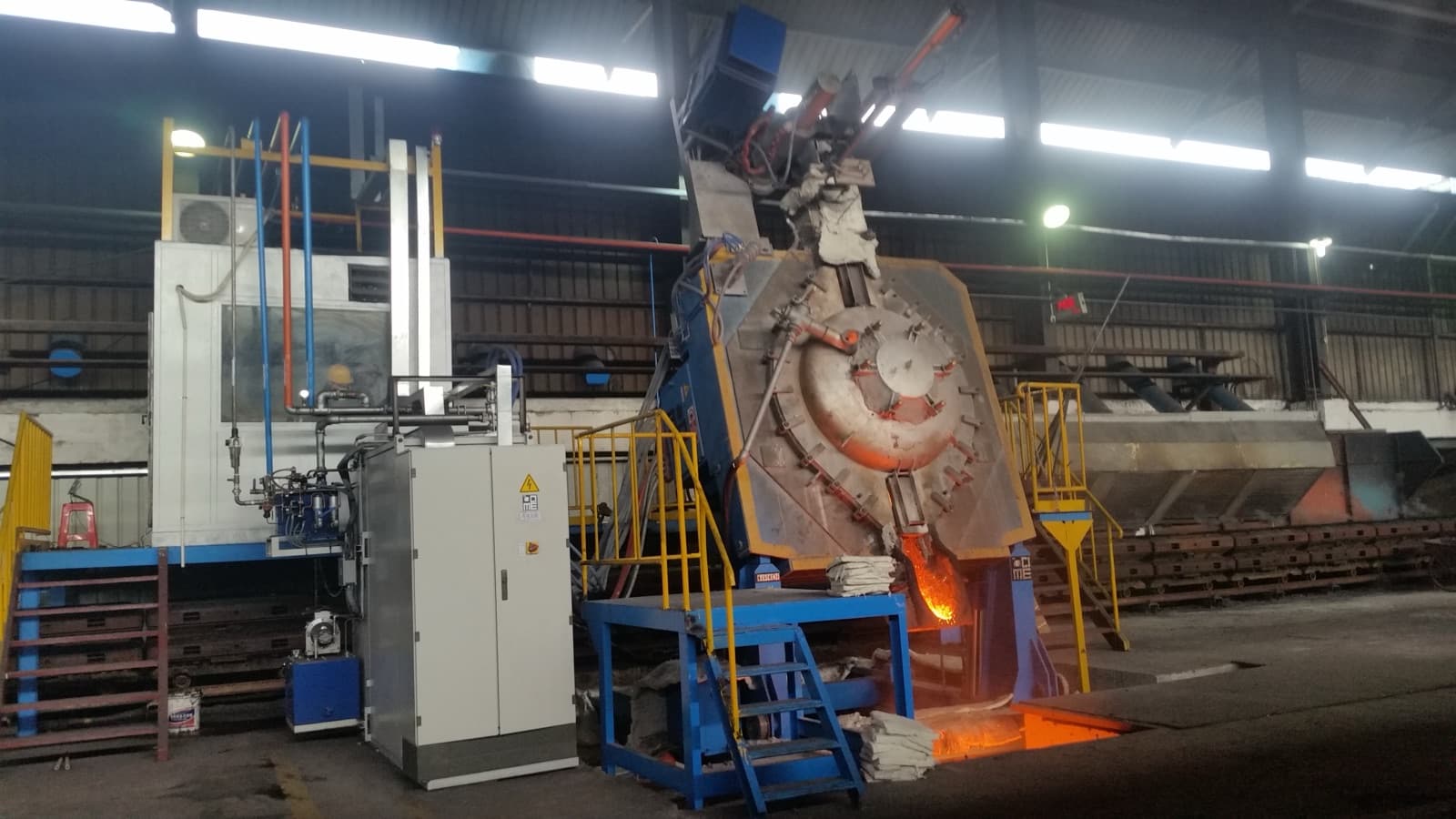
Key takeaways
- Temperature uniformity means the bath sits at one temperature top to bottom, so the pour temperature is consistent, alloy additions stay evenly dissolved, and a single probe reading can be trusted.
- A coreless induction furnace delivers it two ways: the coil wraps the whole crucible so the field heats the entire charge at once, and electromagnetic stirring circulates the melt continuously so hot regions cannot persist.
- Uniformity is not fixed. It follows the strength of the stir, which depends on frequency, bath level, applied power, crucible geometry and coil design; a low heel or too little power lets the bath stratify.
- Verify it by reading the bath at more than one depth: in a well-stirred furnace the two agree. An even bath lowers scrap and holds ductile iron chemistry in spec. CIME builds coreless furnaces up to 10 MW.
Why bath temperature uniformity matters
Ask a foundry engineer what they want from the melt and the answer is rarely a single peak temperature. It is a bath that sits at one temperature, top to bottom and edge to centre, and holds it. A uniform bath pours the same metal into the first mould and the last, keeps alloy additions evenly dissolved, and gives a single, trustworthy reading when the operator dips a probe. A stratified bath does none of these: the top runs hotter than the bottom, a thermocouple reads whatever depth it happens to reach, and the pour temperature drifts as the level drops.
That evenness is the quiet foundation under everything downstream. Casting soundness, the timing of inoculation, the stability of ductile iron chemistry and the plain repeatability of a pour all rest on a bath that is the same everywhere. It is also what makes a temperature set-point mean something: there is little use in holding a 1450 °C target if the number describes only the spot the probe happened to touch. This is why uniformity, not just temperature, is the metric worth engineering for, and why a coreless induction furnace is built to deliver it.
Note
Uniform does not mean cold or slow. A coreless bath can be pushed to a high superheat and still stay even, because the stirring that mixes it works just as hard when the metal is hot. Uniformity is about the spread of temperature across the bath, not its level.
How a coreless furnace heats evenly
A coreless induction furnace has two things working for it here, and they reinforce each other. The first is how it heats. The coil wraps the whole crucible, so the alternating magnetic field couples into the entire charge at once and generates heat all around the bath, not at a single burner or a channel throat. The whole volume of metal is brought up together, a very different starting point from a flame that heats the surface and lets the heat conduct slowly downward. For the principle itself, see how an induction furnace works.
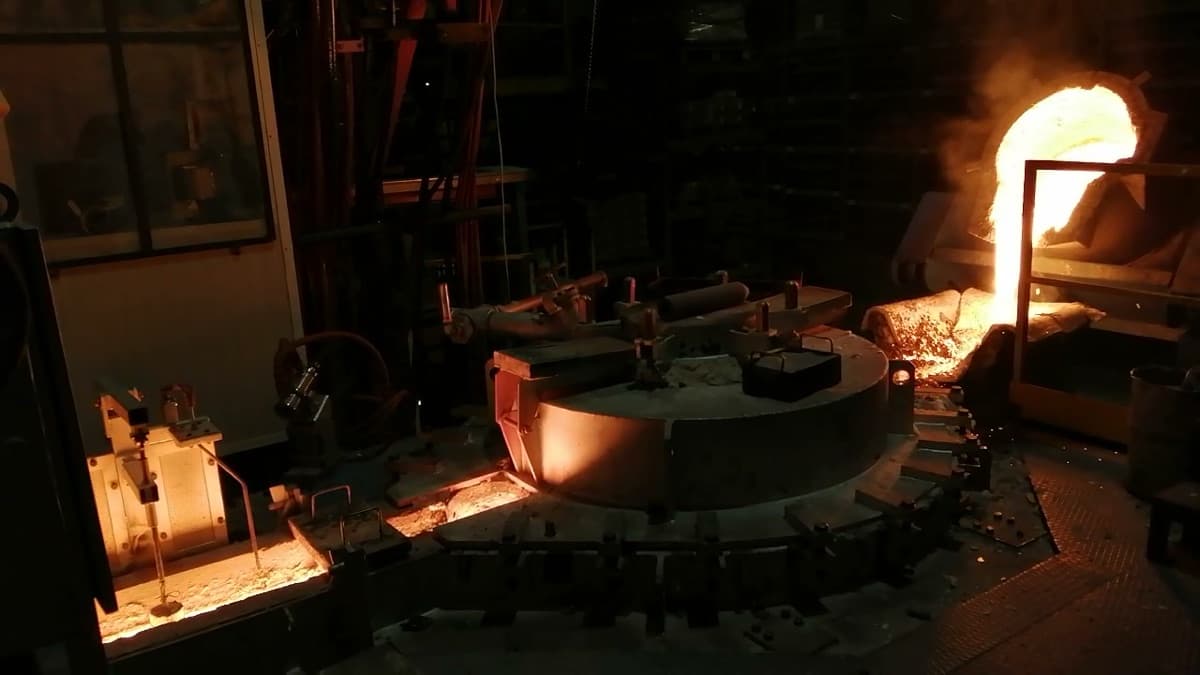
The second, and the decisive one, is electromagnetic stirring. The same field that heats the metal also pushes on it. The induced currents in the bath and the magnetic field together produce a force that sets the molten metal circulating, rolling it from the walls toward the centre and from top to bottom. That constant motion mixes the bath continuously, so a hot region cannot persist and an addition cannot sit undissolved in one corner. The result is a bath that homogenises its own temperature and composition, second by second, without anyone stirring it by hand.
This is where the coreless design pulls ahead of a channel furnace, which heats the metal in a loop through an iron core and moves the main bath far less, and it is the same whole-bath heating that lets a coreless unit change alloy and empty completely. The contrast is set out in coreless vs channel induction.
What drives, and what degrades, uniformity
Stirring is not a fixed quantity. How hard a coreless bath mixes, and therefore how uniform it stays, depends on a handful of things the melt shop actually controls.
| Factor | Effect on bath temperature uniformity |
|---|---|
| Electromagnetic stirring | Circulates the whole bath, evening out temperature and composition |
| Frequency | A lower frequency stirs harder and deeper; a very high frequency stirs less |
| Bath level (heel) | A full bath stirs and homogenises; a low heel weakens the mixing |
| Applied power | Enough power keeps the bath moving; too little lets it stratify |
| Crucible geometry | A sound height-to-diameter ratio helps the stir reach the whole bath |
| Coil and insulation (UHP) | Even coupling along the coil and low losses keep the walls from running cold |
Two of these deserve a word. Frequency sets the character of the stir: a lower frequency drives a stronger circulation and a deeper heated layer, while a very high frequency couples into a thinner skin and moves the bath less. That is why medium-frequency coreless furnaces stir well across a wide range of metals. Bath level is the one operators feel day to day: a furnace run down to a shallow heel loses much of its stirring, so the last of a melt is less uniform than a full bath. Keeping the furnace reasonably full, matching power to the load and running a sound coil all keep the stir alive. The coil side of this, laminations against water-cooled plates and the UHP approach, is covered in UHE vs UHP coil design.
A coreless bath does not sit still and hope to even out. The field that melts it also rolls it over, so it mixes its own temperature away, continuously.
Measuring and verifying it
Uniformity is only useful if you can trust it, and the way to trust it is to check. The direct test is to read the bath at more than one depth: an immersion thermocouple taken near the surface and again lower down should give the same temperature in a well-stirred furnace, and a large gap between them is the signal that the stir has weakened or the power is too low. An optical pyrometer reads the surface quickly for routine checks, while the immersion probe remains the reference for the bulk of the bath.
In practice the furnace itself carries much of the load. A modern melting system meters the power it delivers and tracks the bath, so it holds a set temperature and flags a drift long before it shows in a bad casting. The point of measuring is not one perfect number but a habit: read the bath, watch that top and bottom agree, and treat a growing difference as a maintenance signal rather than a surprise at the pour. How that same control keeps the energy side honest is in induction furnace energy consumption.
Why it pays off downstream
A uniform bath is worth the attention because it decides so much of what happens after it. A pour taken from an even bath fills every mould at the same temperature, so shrinkage and fill behave the same casting to casting and scrap from cold or hot pours falls. On ductile iron the payoff is sharper still: an evenly mixed, evenly heated bath keeps the treatment and inoculation working as intended and holds the chemistry in spec, which is exactly the stability a heated press-pouring buffer then protects on the line. That handoff is in press pouring vs ladle pouring.
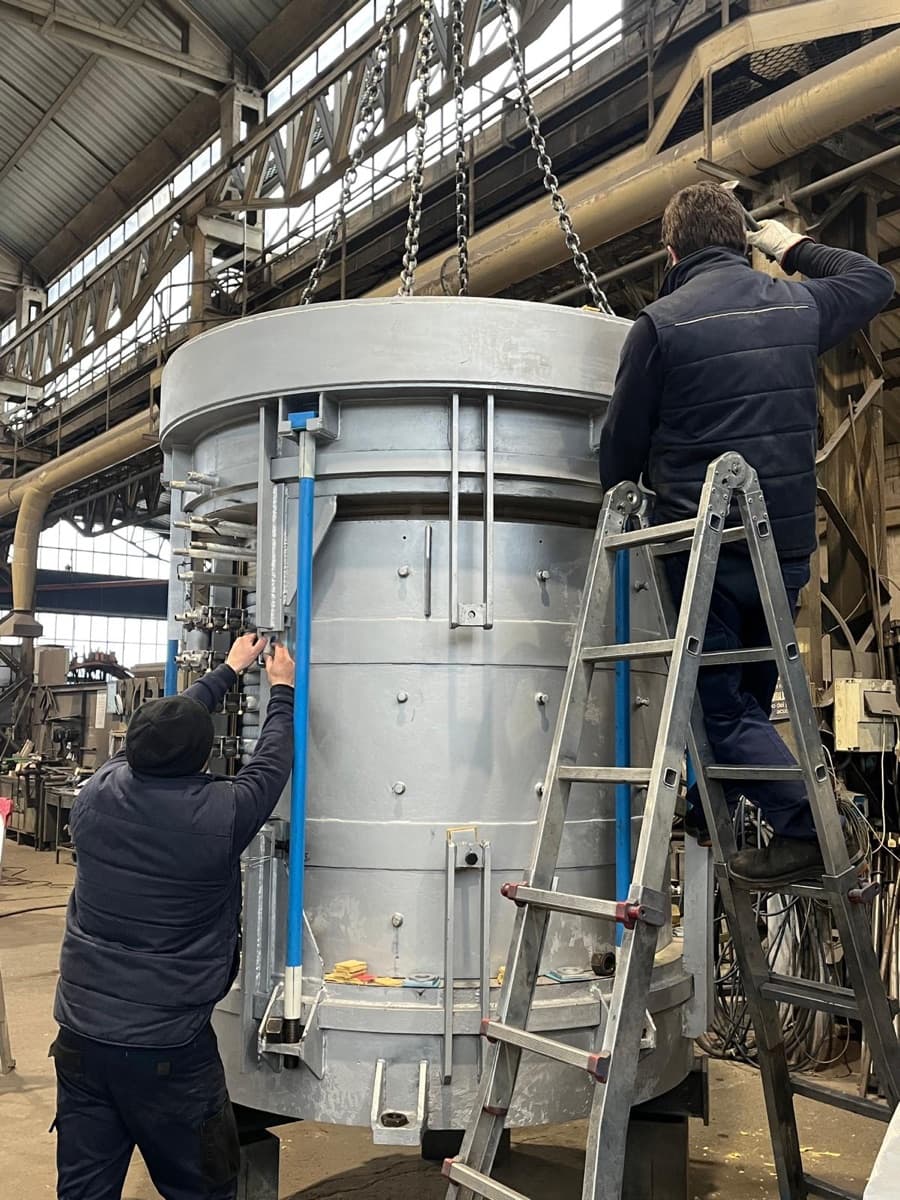
None of this asks for anything exotic. It comes from the way a coreless furnace is built: a coil around the whole crucible, a field that both heats and stirs, and a control system that keeps the two matched. Specify the furnace to the melt, keep it reasonably full and let the stir do its work, and the bath stays even on its own. See the melting furnaces and the core technology for how the coreless platform is engineered around that even bath.
Key point
Uniformity is not a feature you switch on. It is the natural result of heating and stirring the whole bath at once, then keeping the furnace full enough and powered enough to let it mix. Read the bath at two depths; if they agree, the rest of the shop can rely on the number.
Frequently asked questions
Why is temperature uniformity important in melting?
Because a uniform bath pours the same metal into every mould, keeps alloy additions evenly dissolved and gives a single trustworthy temperature reading. A stratified bath runs hotter at the top than the bottom, so the pour temperature drifts, the probe reads only the depth it reaches, and casting results become inconsistent. Uniformity, not just a peak temperature, is what makes a set-point meaningful.
How does a coreless induction furnace keep temperature uniform?
In two reinforcing ways. The coil wraps the whole crucible, so the magnetic field heats the entire charge at once rather than a surface or a channel throat. And the same field stirs the metal: electromagnetic stirring circulates the bath continuously, mixing temperature and composition so a hot region cannot persist. Together they hold the bath at one temperature throughout.
What is electromagnetic stirring?
It is the movement the magnetic field induces in the molten metal. The induced currents in the bath and the coil field together produce a force that sets the melt circulating, rolling it from the walls to the centre and from top to bottom. That constant motion mixes the bath on its own, evening out temperature and dissolving additions without any mechanical stirrer.
What reduces temperature uniformity in an induction furnace?
Anything that weakens the stir. Running the furnace down to a shallow heel loses much of the circulation, so the last of a melt is less uniform than a full bath. Too little applied power lets the bath stratify, a very high frequency stirs the metal less, and a poor crucible geometry keeps the motion from reaching the whole bath. Keeping the furnace reasonably full and matching power to the load keep it even.
How do you measure bath temperature uniformity?
Read the bath at more than one depth. An immersion thermocouple taken near the surface and again lower down should give the same temperature in a well-stirred furnace; a large gap between them flags a weak stir or low power. An optical pyrometer reads the surface for quick checks, while the immersion probe stays the reference for the bulk of the bath, and a modern control system tracks the trend.
References and sources
- Foundry Trade Journal, technical article on coreless induction melting practice, 2006.
- Cast Metal Times, coreless induction and electromagnetic stirring, 2004.
- CIME S.r.l., internal process and engineering documentation on coreless melting, Turin.