Key takeaways
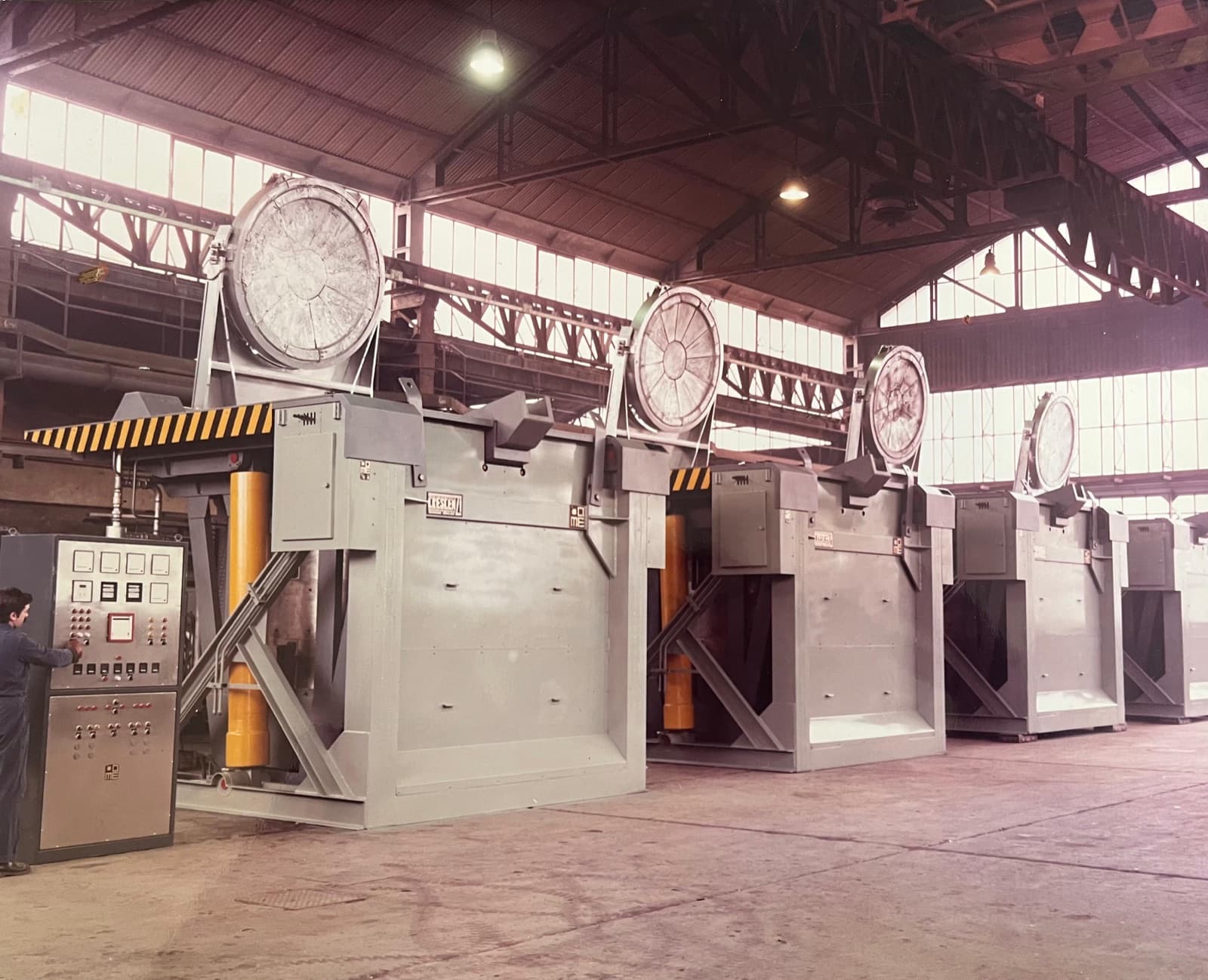
- UHE, Ultra High Efficiency, wraps the coil in a continuous crown of magnetic laminations and a stainless-steel shell, sized for the lowest stray field and the lowest energy per tonne.
- UHP, Ultra High Power, clamps the coil with water-cooled magnetic plates that push back against thermal expansion, giving an exceptionally robust structure that holds steady at extreme power.
- The UHE build has been reported to be about 12% more efficient than a conventional coreless furnace, a figure to treat as indicative since it depends on metal, size and duty.
- On top of either structure, the coil can be modular: bolted, monitored, interchangeable bridge sections that can be bypassed and replaced one at a time. CIME builds coreless melting furnaces up to 10 MW.
Two ways to build the same furnace
The coils are the same idea in both designs. In a coreless furnace the water-cooled coils carry the alternating current that melts the charge. What changes between UHE and UHP is the magnetic structure wrapped around those coils: the assembly that closes the magnetic field and holds everything together.
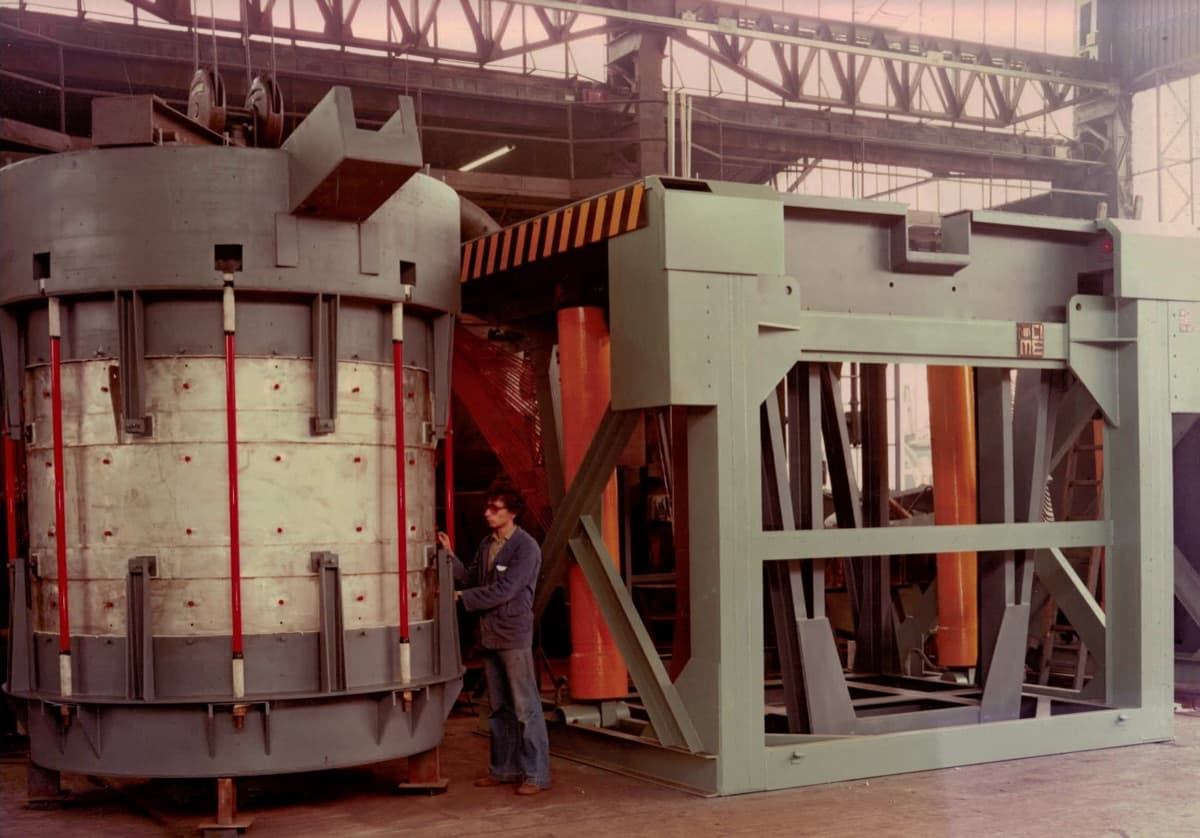
UHE, Ultra High Efficiency, wraps the coils in a continuous crown of magnetic laminations, covered by a stainless-steel outer shell and sized to keep the stray magnetic field as low as possible. The result is a solid structure that does not vibrate or hum, with high insulation efficiency and the lowest energy per tonne.
Note
The UHE design has been reported to be about 12% more efficient than a conventional coreless furnace. Treat that figure as indicative rather than absolute: the real gain depends on the metal, the furnace size and the duty cycle.
UHP, Ultra High Power, takes the opposite starting point. Water-cooled magnetic plates surround and clamp the coils, so that as the structure heats and expands the plates push back and keep it dimensionally stable. That clamping gives an exceptionally robust assembly that holds steady even at extreme power, with zero vibration. Both builds reduce energy use and both insulate well: the difference is whether the design is optimised for the lowest bill or the toughest duty.
UHE vs. UHP, head to head
The choice is not better against worse. It is which goal matters most on a given line: the lowest kilowatt-hours per tonne, or the most robust structure at extreme power. Maximum furnace power is 10 MW in either build.
Both structures sit underneath the same coreless melting range. For the underlying physics, see coreless vs channel induction; for the power side of the same furnace, see the SCR to IGBT retrofit.
The choice is not better against worse. It is whether the line is optimised for the lowest energy bill or the toughest duty cycle.
CIME Technical Office, Turin
The modular coil
On top of either structure, the coil itself can be modular. It is built from individually bolted, interchangeable bridge sections, and each section carries its own cooling, its own temperature reading and its own on-screen monitoring. The operator sees the state of every section in real time, not just the furnace as a whole.
If a single turn becomes anomalous, that section is isolated and bypassed so the furnace keeps running rather than dropping out of the melting cycle. Later, only the damaged section is replaced, not the whole coil. Ordinary maintenance staff can do it, with no specialist training and no need to call back the builder, which is what gives the coil years of trouble-free service.
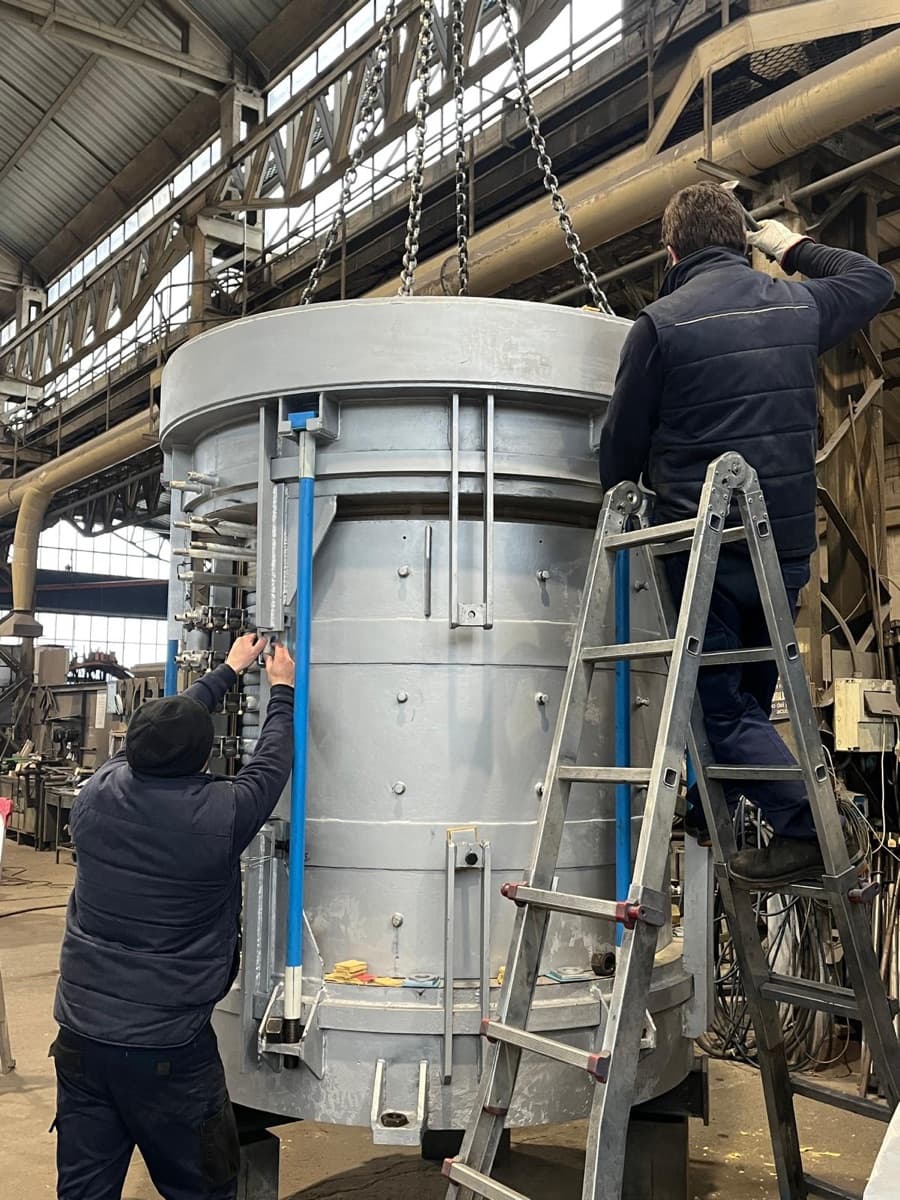
The point of the modular coil is the same as the point of choosing UHE or UHP in the first place: a structure built to keep a foundry running. Whether the priority is the lowest energy per tonne or stability at extreme power, the coil that sits inside it is monitored section by section and treated as routine maintenance, not a line stoppage.
Key point
UHE and UHP solve the same problem two ways. Tell us the metal and the duty cycle, and the right magnetic structure follows, with a modular coil on either one.
Frequently asked questions
What is the difference between UHE and UHP?
They are two ways of building the magnetic structure around the same coreless coil. UHE, Ultra High Efficiency, wraps the coils in a continuous crown of magnetic laminations for the lowest energy per tonne. UHP, Ultra High Power, clamps the coils with water-cooled magnetic plates for an exceptionally robust structure at extreme power. Both reduce energy use and both run without vibration.
Is UHE really more efficient than a conventional furnace?
The UHE design has been reported to be about 12% more efficient than a conventional coreless furnace. That figure is best read as indicative rather than absolute, because the real saving depends on the metal, the furnace size and the duty cycle of the line.
What does a modular coil add to either build?
The modular coil is made of bolted, interchangeable bridge sections, each with its own cooling, temperature reading and on-screen monitoring. If one turn becomes anomalous, that section is isolated and bypassed so the furnace keeps running, and only the damaged section is later replaced by ordinary maintenance staff.
References and sources
- CIME S.r.l., internal melting-furnace design documentation, Turin (UHE and UHP coil structures, modular coil).
- Foundry Trade Journal, technical article on coreless induction practice, 2006.
- Cast Metal Times, coreless induction melting and coil design, 2004.