Tandem system · 1 source, 2 bodies
The Tandem
Induction
System.
One source, two furnace bodies: continuous melting and pouring, with no interruption. From 2 to 60 t per furnace, up to 10 MW.
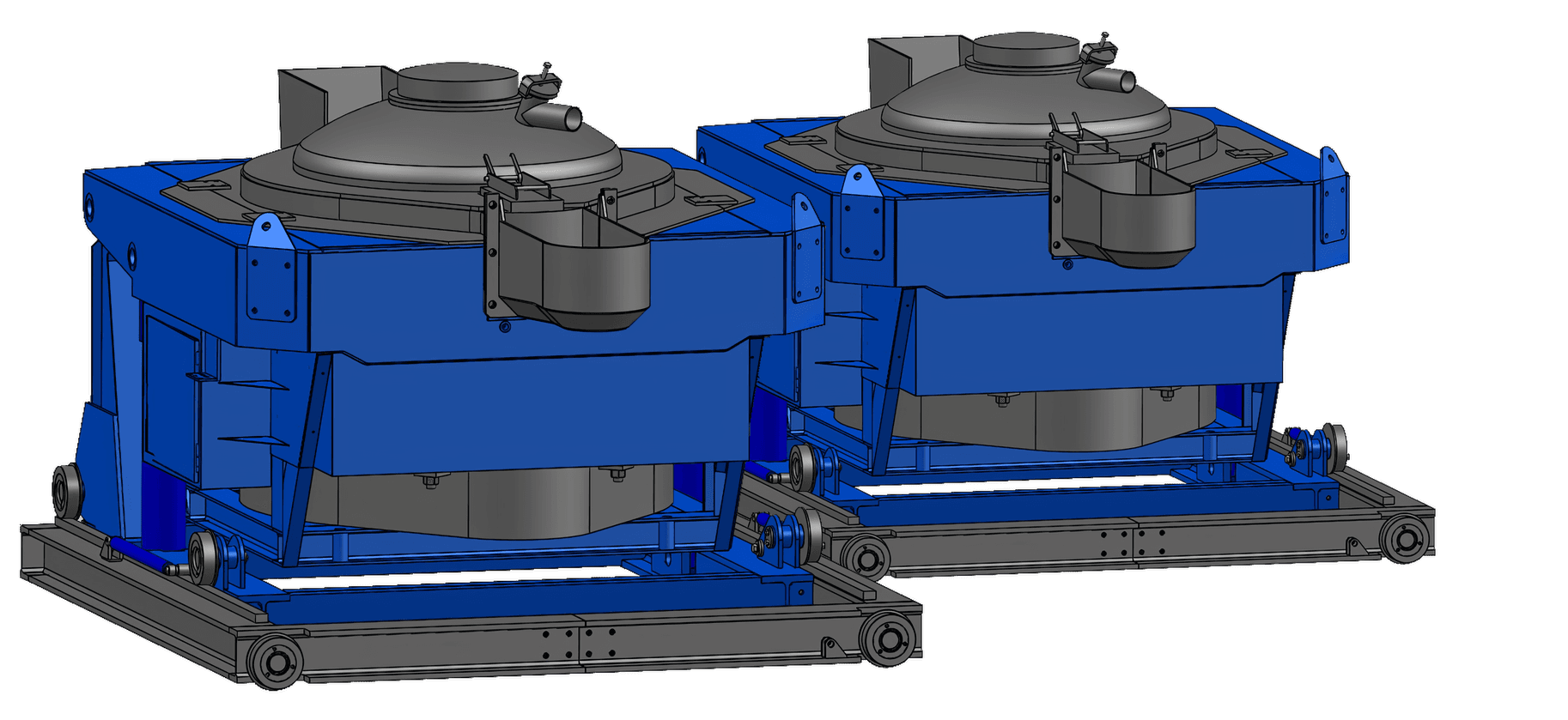
01 · The principle · tandem system
Two bodies. One converter.
No waiting.
A tandem system pairs two coreless furnaces to a single power converter that distributes power from 0 to 100% between them under computerized control. While one melts, the other holds or pours, so the casting line never waits for metal.
Why tandem pays off.
Two standalone furnaces each need a converter sized for peak power. A tandem pairs two bodies with one converter sized to the duty cycle, so connected power and capital drop while melt rate stays high.
The key points.
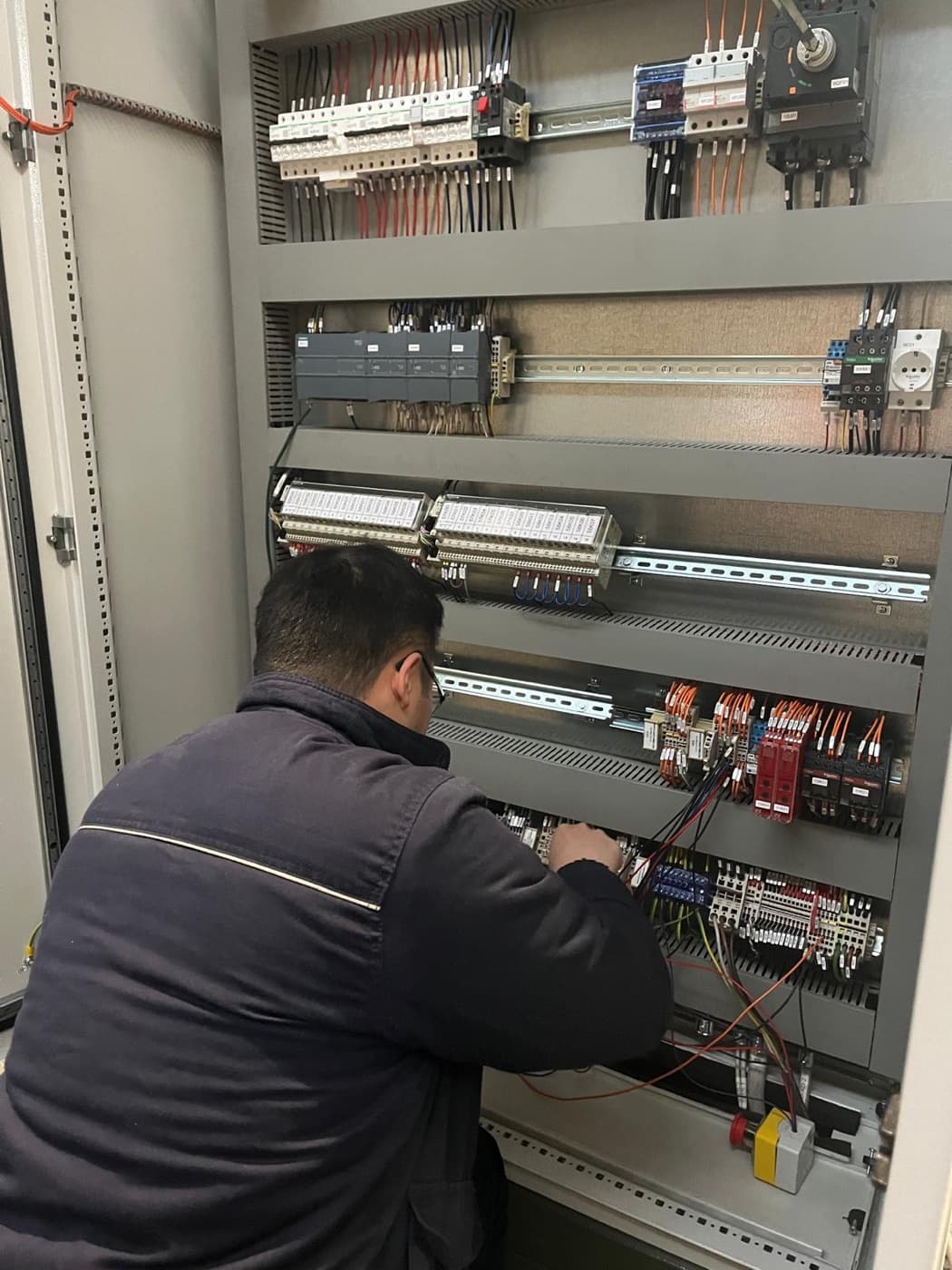
One shared converter
A single IGBT converter feeds both furnace bodies, from 1 MW up to 10 MW, so installed power is used at 100% at all times.
How the tandem system runs
One furnace melts while the other pours the metal.
IGBT converters & SCR retrofit
Modern IGBT power supplies deliver a high power factor and clean power quality. Existing SCR furnaces can be retrofitted to IGBT to recover efficiency and capacity.
Computerized tandem control
Power sequencing, temperature curves, energy logging and recipe memory coordinate both bodies and interface with the melt shop, the casting line and the foundry MES.
Add-ons & upgrades.
Metal weighing system
Load cells under the crucible support give continuous, precise measurement of the molten metal in each furnace. Used for computerized melting, accurate production changes and a direct interface to the plant ERP.
MOLE charging system
Automatic charging of solid metal, scrap, ingots and returns into the furnace body. The MOLE moves and discharges material under control, optimising melt time and safety.
SCR to IGBT retrofit
Upgrade an existing SCR converter to a modern IGBT unit, recovering power factor, efficiency and capacity on installed equipment, a lower-capex route to modern, high-efficiency performance.
Spare melting unit
A ready spare coreless body, installed fast on a failure or stoppage so the foundry avoids its most expensive risk: unplanned downtime.
Engineered to your requirements.
Tandem system · technical data
Per-furnace capacity · tonnes
From 2 t to 60 t per furnace. Each system is sized to the melt rate the foundry needs. Custom layouts available on the 700+ install base.
Operational questions, straight answers.
What is a tandem induction system?
Two independent coreless crucible furnaces fed by a single power converter. The converter distributes power from 0 to 100% between the two furnaces under computerized control, so installed converter capacity is used continuously. Each body tilts hydraulically and runs its own melt, hold and pour cycle.
What does one source, two bodies mean?
One power source, the converter, feeds two furnace bodies. While one melts, the other can hold or pour, so the converter is never idle and output stays at its maximum.
What capacity and converter power are available?
Up to 60 tonnes per furnace, converter power from 1 MW to 10 MW. Each system is sized to the melt rate the foundry needs.
Can the converter power one furnace at full power?
Yes. The converter can be dedicated to a single body, for example when the other one is under maintenance.
Which metals can it melt?
Grey and ductile (nodular) iron, carbon and alloy steel, copper and bronze, and aluminium, up to 1650 °C. If required, electromagnetic stirring keeps temperature and chemistry homogeneous in each body.
Can existing furnaces be retrofitted from SCR to IGBT?
Yes. CIME retrofits existing SCR converters to modern IGBT power supplies, recovering power factor, efficiency and capacity on installed equipment.
Does a tandem reduce installed power and capital?
Yes. One converter sized to the duty cycle replaces two converters sized for peak, cutting connected power, capital and footprint while keeping melt rate high.
Built around your foundry.
Whether you need a tandem system engineered to your process from the ground up, or want to bring an existing installation up to date with our components and controls, talk to CIME. We engineer to your operation, not to a catalogue.