Key takeaways
- An induction furnace melts metal with a magnetic field rather than a flame: a converter feeds a water-cooled coil, the coil's alternating field induces eddy currents in the charge, and the metal heats and melts from the inside.
- The system has two parts. The IGBT converter is the brain, conditioning the mains supply into the frequency and power the coil needs and controlling the melt; the coil and crucible are the muscle that turn that power into heat in the metal.
- Because the heat is made inside the metal with no combustion, induction melting is clean, recovers the full charge including scrap, runs at high energy efficiency and holds temperature under precise digital control.
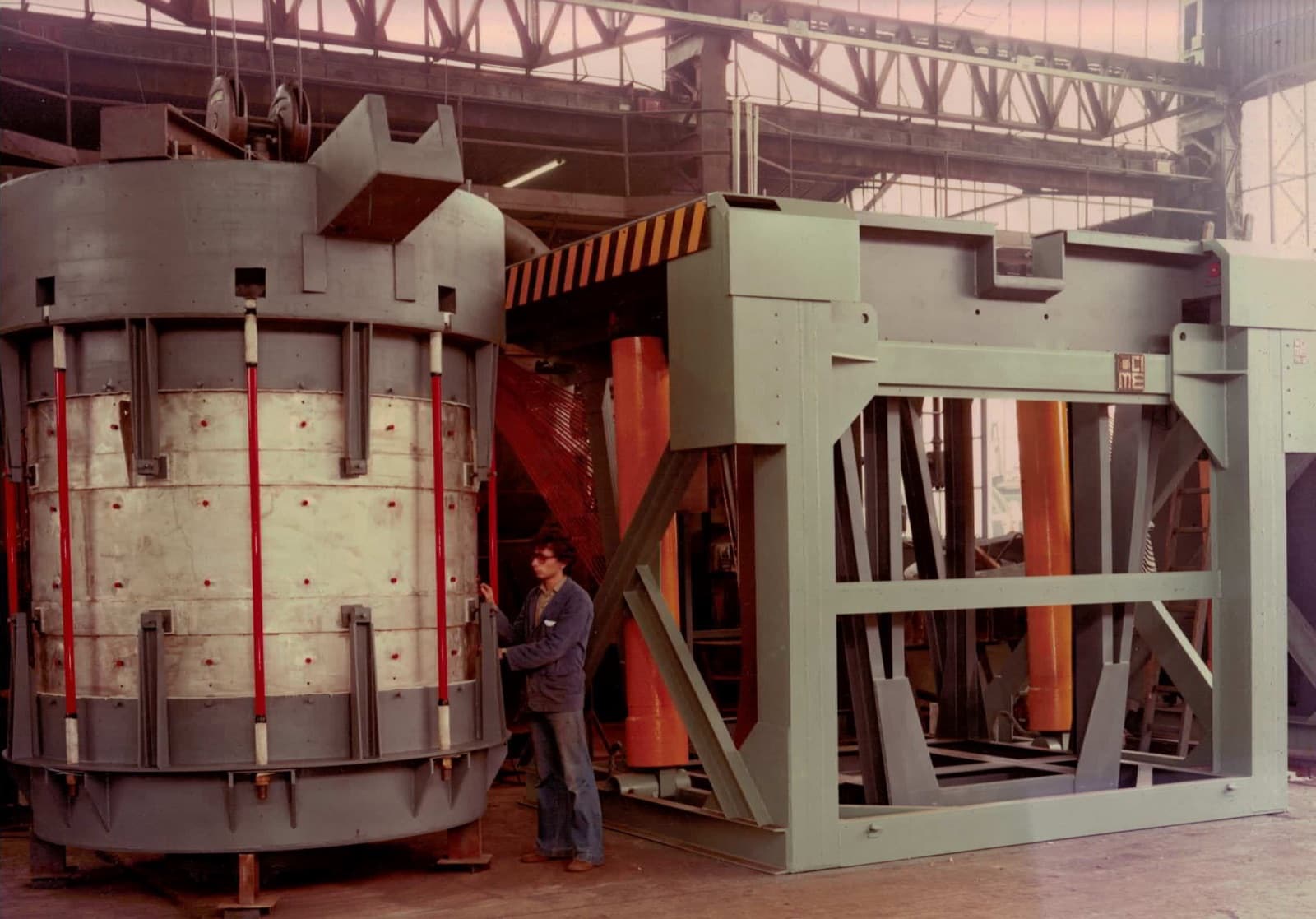
- Most foundry melting is done in coreless induction furnaces, which heat and stir the whole bath and empty completely for easy alloy changes. CIME has engineered coreless induction furnaces in Turin since 1952.
What an induction furnace does
An induction furnace melts metal with electricity, not with a flame. Where a cupola or a fuel-fired furnace burns fuel and passes the heat to the metal from outside, an induction furnace uses a magnetic field to generate the heat inside the metal itself. There is no burner, no combustion and no flame touching the charge. That single difference is the reason foundries across the world melt iron, steel, copper and aluminium this way.
The idea is easy to picture. A charge of cold metal, scrap, foundry returns and fresh alloy, is loaded into a crucible wrapped in a copper coil. Power is switched on, the coil sets up a rapidly alternating magnetic field, and within minutes the metal begins to glow, soften and collapse into a bright liquid bath. The furnace holds that bath at a controlled temperature until it is ready to pour. What looks like a simple bucket of molten metal is the result of a precise chain of electrical steps, and the rest of this article walks through them.
Note
An induction furnace does not heat the metal and then wait. It makes the heat in the metal continuously, so the whole bath rises in temperature together and can be held, stirred and corrected while it is liquid. That is what makes it both fast and controllable.
The principle: heat from a magnetic field
The physics behind it is electromagnetic induction, the effect Michael Faraday described in 1831: a changing magnetic field induces an electric current in any conductor nearby. An induction furnace puts that law to work. Alternating current in the coil creates a magnetic field that reverses direction many times a second. The metal charge sitting inside the coil is a conductor, so the changing field induces circulating currents in it, called eddy currents.
Those eddy currents are where the heat comes from. The metal resists them, and that resistance turns the electrical energy straight into heat, spread through the outer layer of every piece in the charge. Because the heat is generated in the metal rather than conducted into it from a flame, it appears fast and evenly, and none of it is lost up a chimney. The higher the frequency of the field, the thinner the heated layer, so the converter's frequency is matched to the size of the furnace and the metal being melted.
The same field does a second useful job. As it heats the bath it also pushes on the molten metal, setting up a gentle circulation that stirs the melt from within. This electromagnetic stirring mixes alloy additions evenly and levels out the temperature across the bath, so a sample taken from the top reads the same as one from the bottom. A fuel-fired furnace has to rely on the metal's own slow convection to do the same thing. For how the coil and the coreless platform are built to couple power efficiently, see the core technology.
Two parts: the brain and the muscle
An induction furnace is really two machines working together. One thinks, the other works, and it helps to keep them separate.
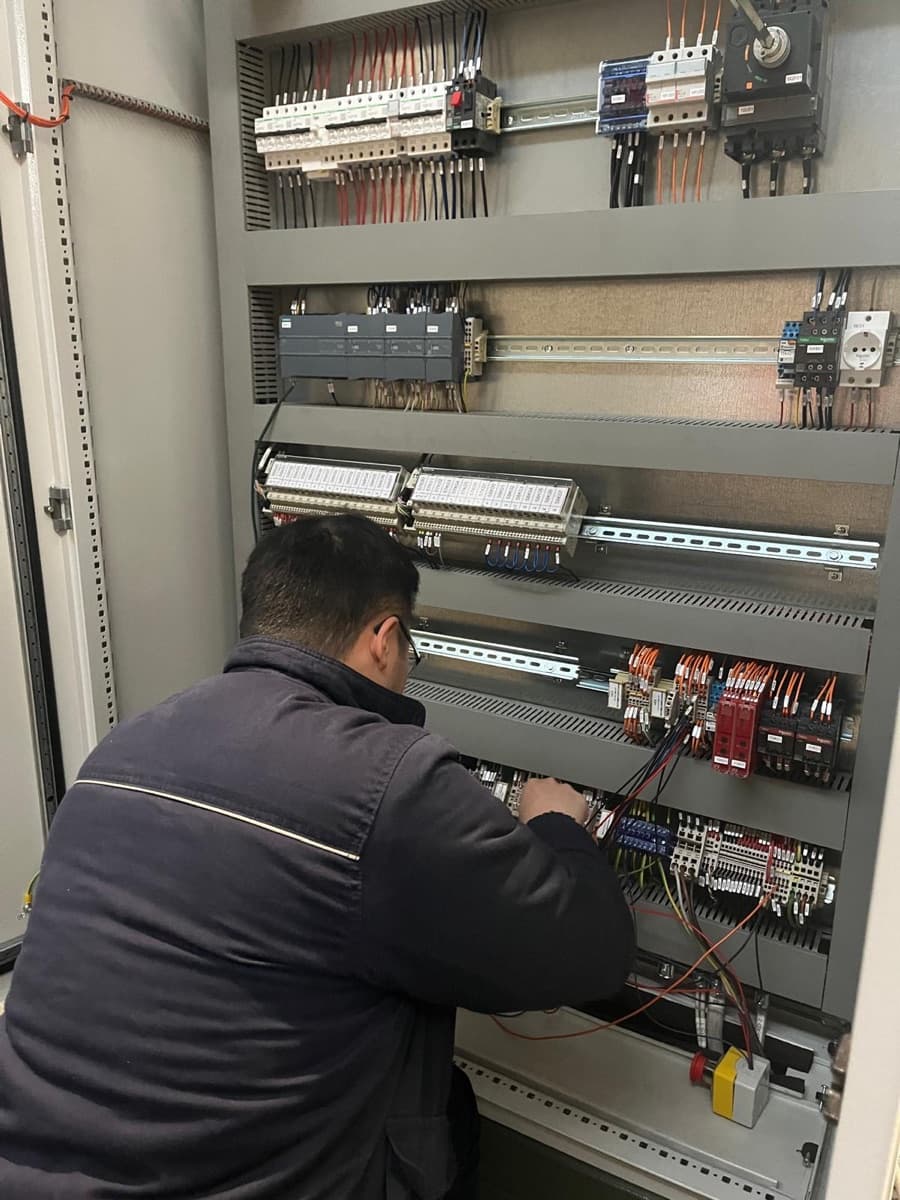
The power converter is the brain. It takes the plant's mains supply and reshapes it into the medium-frequency alternating current the coil needs, at the power level the melt calls for. A modern converter uses IGBT switches, fast semiconductor devices that turn the current on and off thousands of times a second to set frequency and power precisely. This is where the melt is managed: the converter holds the power steady as the charge changes state, tunes itself to the furnace as the metal melts, and feeds the control system that runs the whole cycle. The difference between an IGBT converter and the older SCR type it replaced is covered in IGBT vs SCR converters, and the converters themselves are on the power supply page.
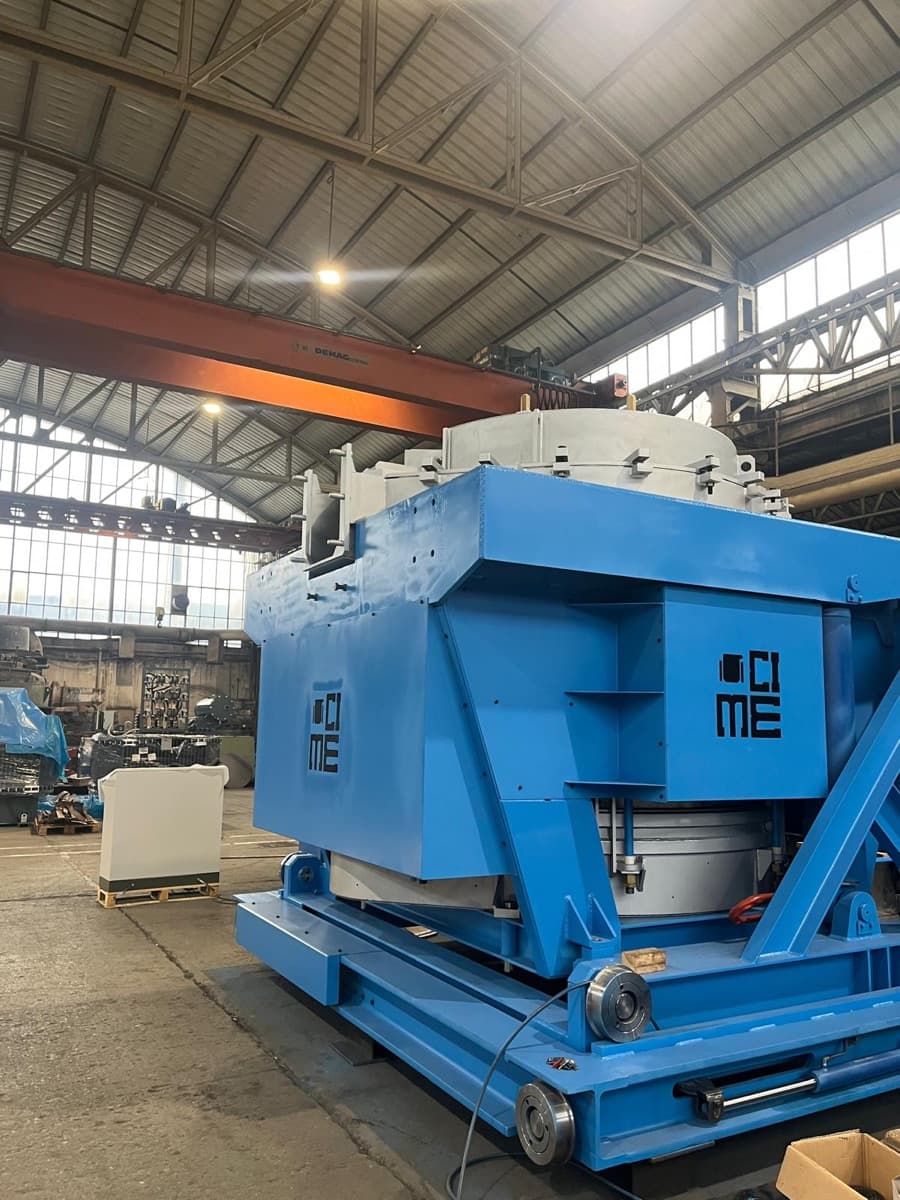
The furnace body is the muscle. At its centre is a refractory crucible that holds the metal, wrapped in a water-cooled copper coil. The coil carries the current from the converter and turns it into the magnetic field that does the melting, while the water cooling keeps the copper from overheating under the load. The whole assembly sits on a tilting frame so the finished melt can be poured out cleanly. On its own the furnace body does nothing; driven by the converter, it melts a tonne of metal in a matter of minutes.
Key point
The split is worth remembering: the converter decides how much power to deliver and at what frequency, and the coil turns that power into heat in the metal. Get either wrong and the melt suffers, which is why CIME engineers the converter and the furnace as one system.
From cold charge to molten metal
Follow one melt from start to finish. The furnace is charged with cold metal: a mix of iron or steel scrap, foundry returns and fresh alloy, sized so it packs into the crucible without bridging. The converter is switched on and ramps up power. At first the field couples into the solid pieces and heats their surfaces; as they soften and slump, a pool of liquid forms at the bottom and grows upward until the whole charge is molten.
Once there is a liquid bath the melt speeds up, because liquid metal couples with the field better than a loose solid charge, and the electromagnetic stirring begins to circulate it. More metal can be added into the bath as it melts down, so the furnace is often topped up rather than filled all at once. When the charge is fully liquid the operator raises it past its melting point to the pouring temperature, a controlled superheat that gives the metal enough margin to fill the castings before it starts to freeze.
Through all of this the temperature is measured and held under digital control. A modern melting system meters the power it delivers and reads the bath, so it can hold a set temperature, correct chemistry with a measured addition, and tell the operator exactly where the melt stands. When the metal is on temperature and in specification, the furnace tilts and pours, into a ladle, a transfer system or, on an automatic line, a heated pouring furnace. How much electricity that whole cycle takes, in kWh per tonne, is the subject of induction furnace energy consumption.
Why foundries melt this way
Set against the older ways of melting, induction offers a consistent set of advantages, and they all follow from the same fact: the heat is made inside the metal, electrically, with nothing burning. Five of them matter most on the foundry floor.
| Advantage | What it gives the foundry |
|---|---|
| Superior metal quality | No combustion products reach the melt, so the metal stays clean and consistent |
| Clean, low-emission process | Heat comes from the magnetic field, not a flame, with no burning and no flue gas from the melt |
| Full scrap recovery | Scrap and returns melt down and are corrected in the bath, so the whole charge is usable |
| High energy efficiency | The heat is generated directly in the metal, not in a furnace and flame around it |
| Precise temperature control | Digital melt control holds the pouring temperature and keeps castings consistent |
Read together, these are why induction has become the standard for foundry melting. Metal quality comes first: with no combustion products to pick up, the melt stays clean, and a stirred, evenly heated bath is easy to sample and correct. The clean process follows, no flame and no flue gas from the melt itself, a better shop environment and a smaller footprint. Full scrap recovery lets a foundry charge its own returns and bought scrap and bring the whole lot to a known chemistry, rather than losing material to an open flame. Energy efficiency comes from putting the heat straight into the metal instead of heating a furnace and a flame around it. And precise temperature control, through the digital converter, keeps the pour on temperature and the castings consistent.
The heat is made inside the metal, electrically, with nothing burning. Every advantage an induction furnace has over a flame follows from that one line.
Almost all foundry melting today is done in coreless induction furnaces, where the coil surrounds a plain crucible and heats the entire bath together, so it empties completely and switches alloy easily. The alternative, a channel furnace, is set out in coreless vs channel induction. CIME has engineered coreless induction furnaces in Turin since 1952, from the melting furnaces themselves to their IGBT power supplies. To see how the platform fits together, start with the core technology.
Frequently asked questions
How does an induction furnace work?
An induction furnace melts metal with a magnetic field rather than a flame. A converter turns mains electricity into a medium-frequency alternating current, a water-cooled copper coil around the crucible turns that current into an alternating magnetic field, and the field induces eddy currents inside the metal charge. Those currents heat the metal from within by its own electrical resistance, so it melts without any combustion or contact with a burner.
What is the working principle of induction melting?
The principle is electromagnetic induction, described by Michael Faraday in 1831: a changing magnetic field induces an electric current in a nearby conductor. In a furnace the coil's alternating field induces circulating eddy currents in the metal, and the metal's resistance to those currents turns the electrical energy into heat directly inside the charge. The same field also stirs the molten bath, which mixes the melt and evens out its temperature and composition.
What are the main parts of an induction furnace?
Two subsystems do the work. The power converter, usually an IGBT medium-frequency unit, is the brain: it conditions the mains supply into the frequency and power the coil needs and controls the melt. The furnace body is the muscle: a water-cooled copper coil wound around a refractory crucible that holds the charge, mounted on a tilting frame so the melt can be poured. Cooling, instrumentation and a control system tie the two together.
Why do foundries use induction furnaces?
Because induction melting is clean, efficient and controllable. The heat is generated directly in the metal with no combustion, so there are no flue gases and no contamination from a fuel, the whole charge including scrap can be recovered and corrected in the bath, and digital control holds temperature precisely. Together these give high metal quality and high energy efficiency, which is why induction is the standard way to melt in modern foundries.
What is a coreless induction furnace?
A coreless induction furnace is the common type in which the coil surrounds a simple crucible with no iron core or channel, so the whole bath is heated and stirred together. It empties completely and changes alloy easily, which is why most foundry melting and CIME's own furnaces are coreless. The alternative, a channel furnace, heats the metal in a loop through an iron core and is used mainly for holding rather than flexible melting.
References and sources
- Foundry Trade Journal, technical article on coreless induction melting, 2006.
- Cast Metal Times, coreless induction furnace practice, 2004.
- CIME S.r.l., internal engineering documentation on induction melting and IGBT power supplies, Turin.