Key takeaways
- A modern IGBT medium-frequency converter delivers higher overall efficiency than the SCR drive it replaces, and holds it across the whole power range.
- It holds a power factor above 0.95 at all times, so the capacitor banks an SCR line needs for correction are no longer required.
- Full-wave three-phase rectification means no higher harmonics are pushed back onto the grid, protecting neighbouring equipment.
- IGBT power stays constant regardless of charge volume or lining wear, with a reliable 100% cold start even at full load.
- A retrofit keeps the furnace body, coil and shop infrastructure and replaces only the converter, a lower-capex route to modern performance on installed equipment.
The converter is the brain
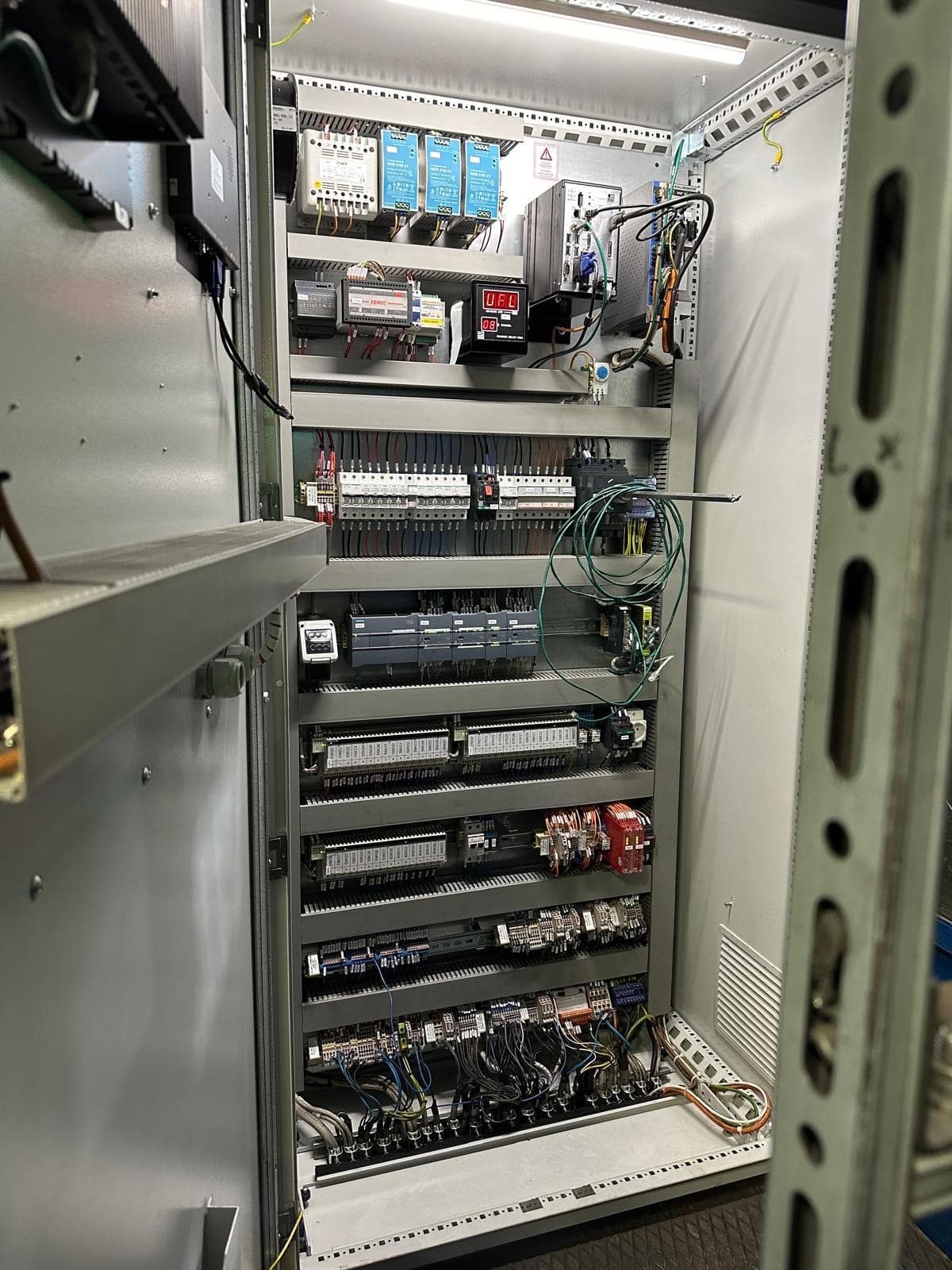
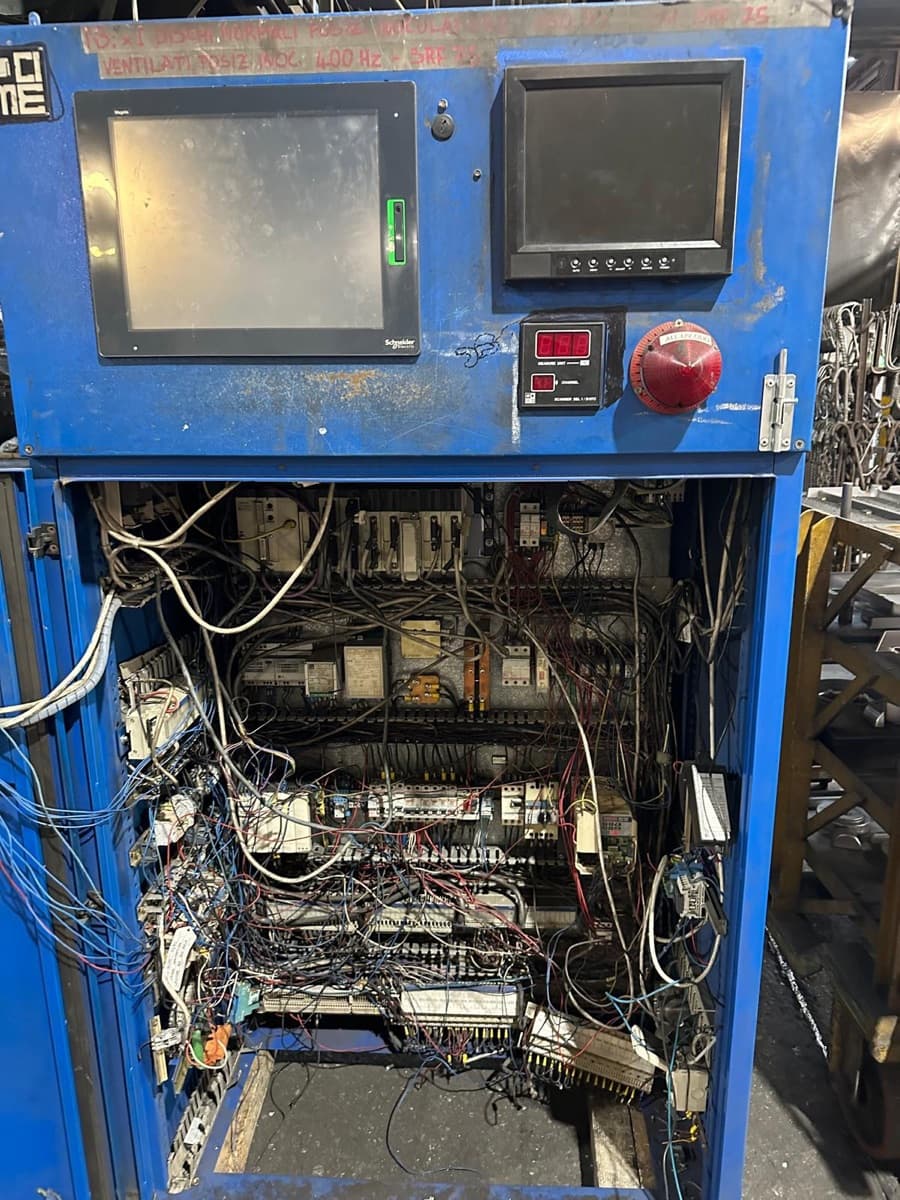
An SCR furnace still works. A modern IGBT converter makes it work far better. The converter takes mains power and shapes it into the medium-frequency current the coil needs. On older furnaces that job is done by an SCR unit, which controls power by partializing the waveform. That approach draws a poor power factor, injects higher harmonics back into the grid, and delivers a power level that drifts with the charge in the crucible and with lining wear.
A modern IGBT medium-frequency converter rectifies the full three-phase wave, then switches it cleanly. The result is more usable power into the metal, a cleaner supply, and output that stays constant from a cold, full charge to the last tap. The converter is, in effect, the brain of the furnace, and replacing it changes how the whole line behaves.
Note
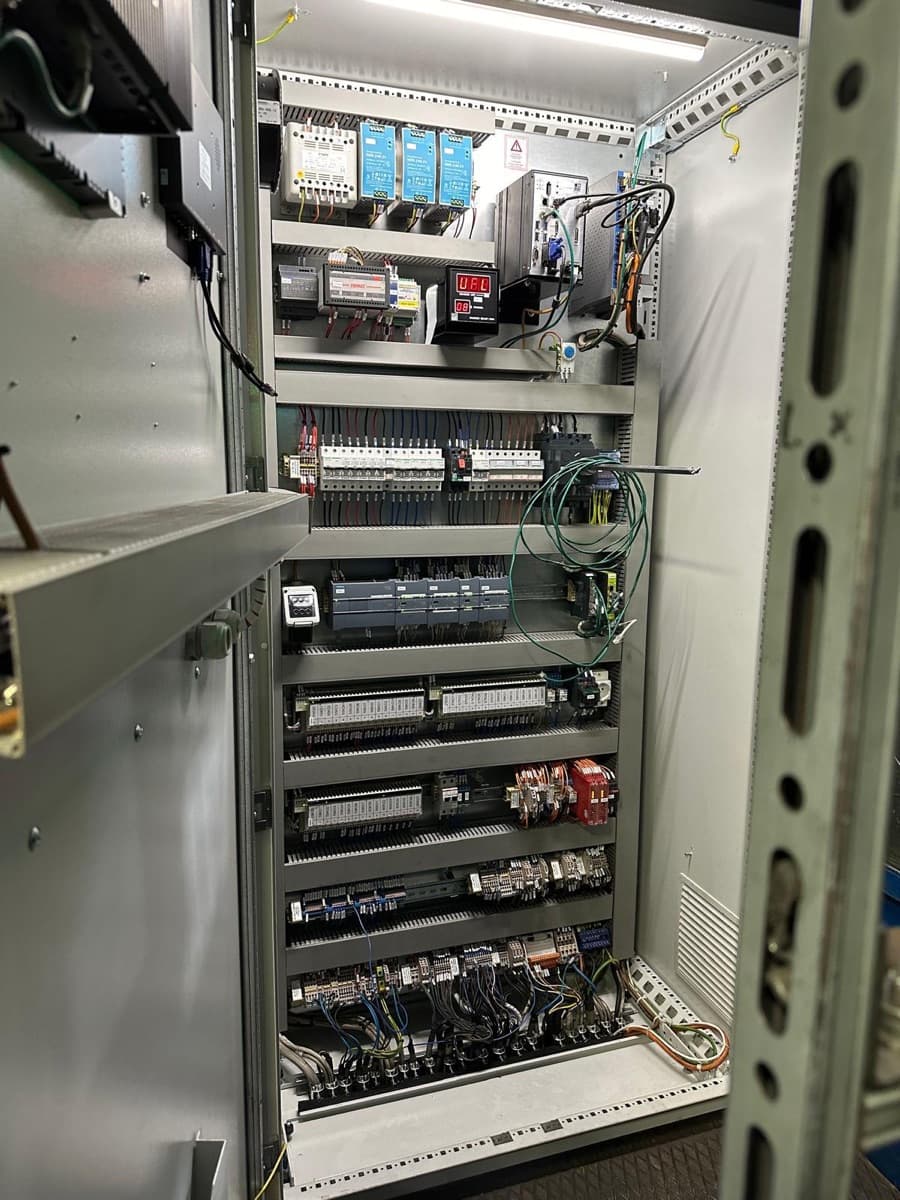
A retrofit keeps the furnace body, coil and shop infrastructure and replaces only the converter. CIME does this on installed equipment, recovering power factor, efficiency and capacity for a fraction of the cost of a new line. Many SCR furnaces are still in operation; today all new CIME converters are IGBT.
SCR vs IGBT, head to head
Same furnace body, two ways to drive it. SCR controls power by partializing the waveform; an IGBT medium-frequency converter rectifies the full three-phase wave and switches it cleanly. The practical differences show up across power regulation, power factor, grid cleanliness and cold-start behaviour. CIME converter power ranges from 1 to 8.5 MW.
For the coil side of the same efficiency question, see UHE vs UHP coil design. For the IGBT power supply itself, including the SCR retrofit service, see the IGBT power supply.
Rectify the full three-phase wave instead of partializing it, and a furnace that already runs starts running far better.
What a retrofit recovers
Constant power is the quiet advantage. An IGBT converter holds its output independent of how much metal is in the crucible and of how worn the lining is, so melt times stay predictable across the whole campaign rather than tailing off as the bath empties or the refractory thins. That stability also pays off on low-magnetic-permeability metals: stainless steel, copper and aluminium melt faster with fewer burnt elements, because power couples reliably instead of fading as the charge changes state.
Because the power factor stays above 0.95, the capacitor banks an SCR line needs for correction simply disappear, and full-wave three-phase rectification means no higher harmonics are pushed back onto the grid to disturb neighbouring equipment. CIME replaces the existing SCR unit with a modern IGBT converter on the installed furnace, recovering power factor, efficiency and capacity without rebuilding the line: a lower-capex path to high-efficiency, future-proof operation.
Key point
A retrofit is not a rebuild. Keep the body, the coil and the shop layout, change only the brain, and you recover power factor, efficiency and capacity on equipment you already own.
Frequently asked questions
Can I keep my existing furnace body and coil in a retrofit?
Yes. A retrofit keeps the furnace body, coil and shop infrastructure and replaces only the converter. CIME swaps the existing SCR unit for a modern IGBT converter on the installed furnace, recovering power factor, efficiency and capacity for a fraction of the cost of a new line.
What does an IGBT converter recover over an SCR drive?
An IGBT medium-frequency converter runs more efficiently overall than the SCR drive it replaces and holds that efficiency across the power range, while also holding a power factor above 0.95 so capacitor correction banks are no longer needed.
Why does IGBT power stay constant when the charge or lining changes?
An IGBT converter holds its output independent of how much metal is in the crucible and of how worn the lining is. Melt times stay predictable across the whole campaign instead of tailing off as the bath empties or the refractory thins, and cold start reaches 100% even at full load.
References and sources
- Foundry Trade Journal, technical article on induction-furnace power supplies, 2006.
- Cast Metal Times, IGBT medium-frequency converters in coreless practice, 2004.
- CIME S.r.l., internal converter retrofit documentation, Turin.