Key takeaways
- Press-pouring pours by pressure, not by tilting. Inert nitrogen pressure pushes the melt up a discharge duct and out as a clean, metered stream.
- The bath sits in a sealed coreless crucible. An elliptical induction coil holds the bath and both ducts at temperature, so nothing freezes between pours.
- The pour is slagless, the metal never contacts air on the way out, and holding under nitrogen preserves magnesium so ductile iron stays in spec.
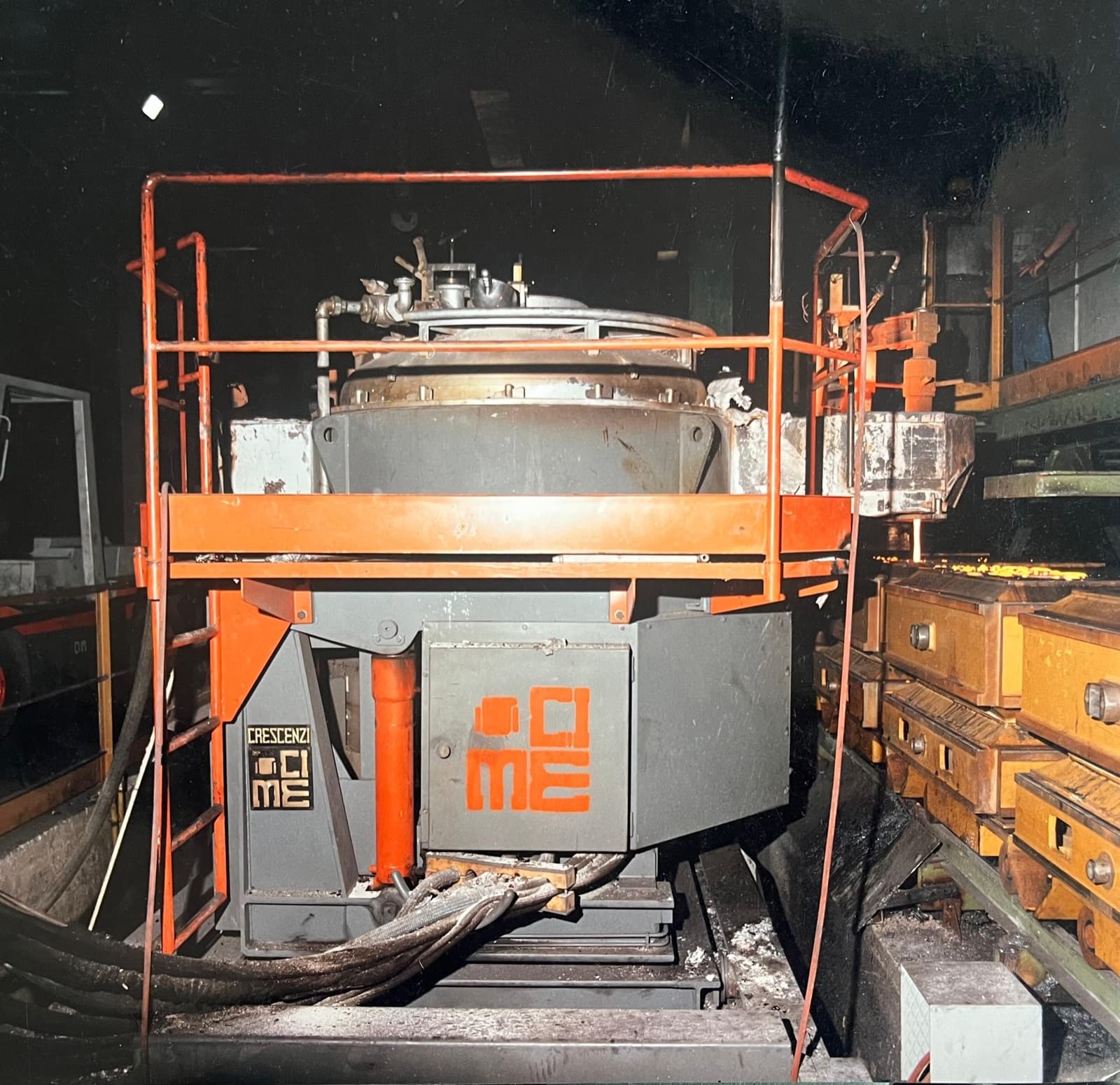
- More than 90% of the bath is discharged by pressure and the furnace empties 100% by back-tilting, leaving no ballast heel. CIME built the world's first automatic press-pouring furnace, in production since 1976.
How the pour works
A press-pouring furnace does the opposite of a tilting ladle: instead of rolling the vessel to spill metal over a lip, it keeps the metal still and pushes it out with gas. Molten metal is fed into a sealed coreless crucible. An elliptical induction coil wraps that crucible and keeps both the charge siphon and the discharge siphon at temperature, so nothing freezes in the ducts between pours.
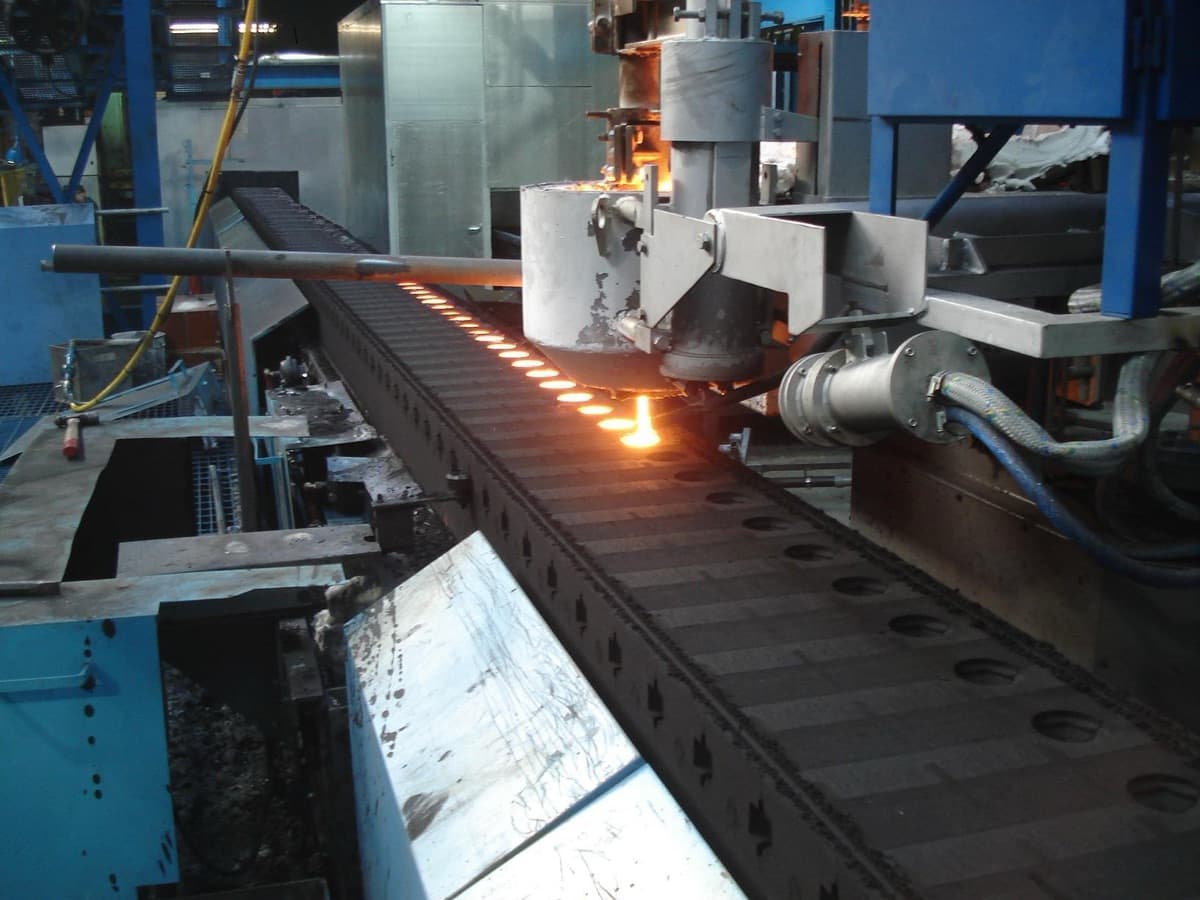
To pour, an electro-pneumatic system raises inert nitrogen pressure inside the sealed vessel. That pressure pushes the melt up the discharge duct, past a stopper-rod that meters the flow, and out as a precise, continuous stream. Because the metal never contacts air on the way out and the slag stays behind in the bath, the pour is slagless. The metal level at the nozzle is held constant by pressure regulation regardless of how full the furnace is, so the first mould and the last mould of a batch are filled identically.
Note
The principle is coreless induction throughout. The same physics that lets a coreless furnace melt and hold a charge is what lets it pour under pressure from a sealed body. CIME has built press-pouring furnaces on this principle since 1976.
Holding the melt as a buffer under nitrogen also runs cooler. Because the metal is never reheated to make up for standing losses, the whole process can run 50 to 70 °C below an unheated system, which saves energy and protects the alloy.
Press-pour vs an unheated system
Compared with an unheated or ladle-fed pouring system, a heated press-pour furnace is a buffer that is always ready, always at temperature, and always under inert cover. The difference shows up where it counts: scrap rate, alloy chemistry and line uptime.
The press-pour buffer is why the line never starves and why a line stop costs nothing: the bath simply holds under nitrogen instead of being cast back into ingots and remelted. For the reason this works on a coreless body and not a channel one, see coreless vs channel induction.
Keep the metal still, keep it sealed, and let nitrogen do the pouring. The bath never sees air, and the slag never leaves the furnace.
Control and discharge
The CAP escalates through three control modes. Joystick is manual, for setup and emergencies. Teach-In records a good pour once, then repeats it mould after mould. Optical HSV reads the sprue cup with a camera and trims the stopper-rod in real time to suit every mould, so each casting is filled to the same weight even as the line varies. The result is a precise, continuous pour onto any automatic moulding line, vertical Disamatic or horizontal alike.
Emptying is just as controlled. More than 90% of the bath is discharged by pressure alone, and the furnace empties 100% by back-tilting, so no ballast heel of metal is left trapped inside. Holding the bath under nitrogen keeps magnesium from fading, so ductile iron pours with practically no loss of nodularity.
Why it matters for a foundry
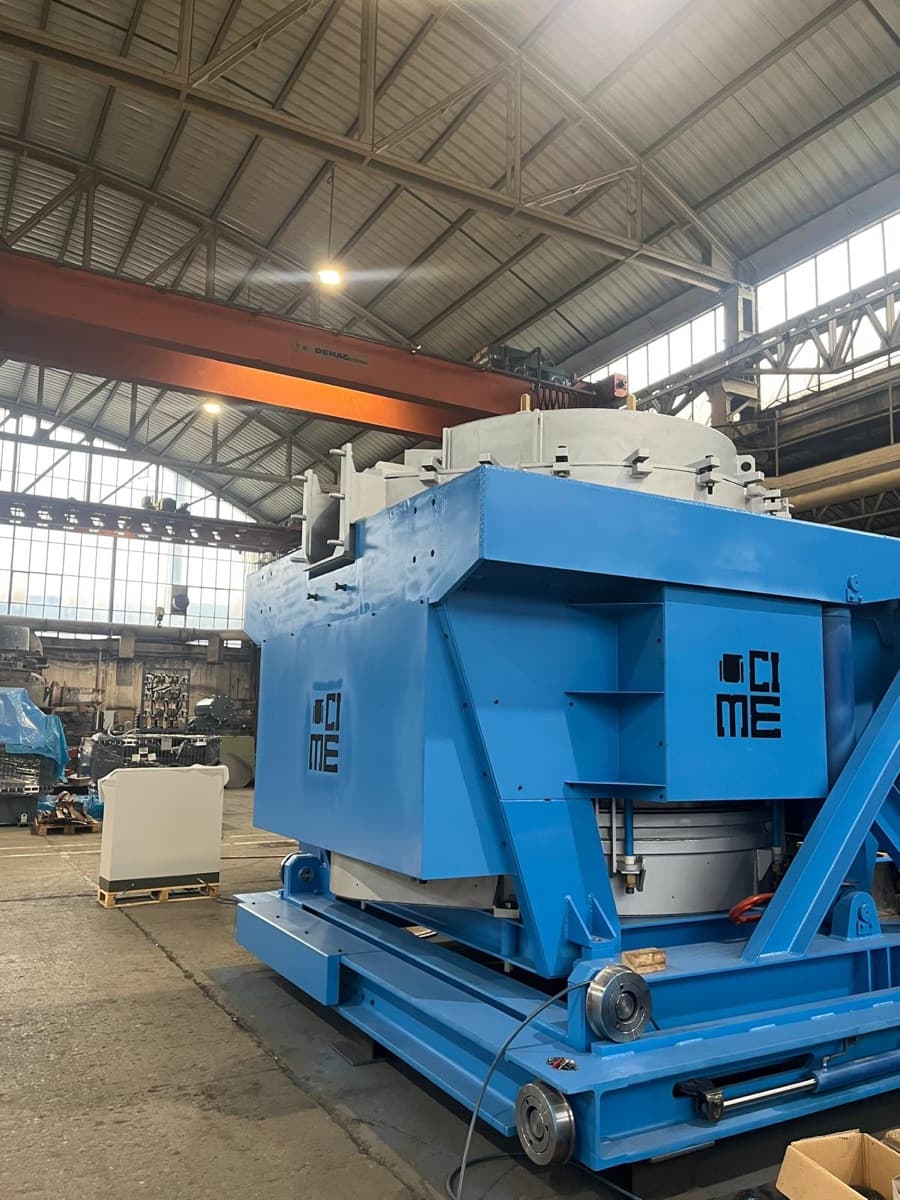
The practical payoff is repeatable castings with less scrap and less waste. A heated, sealed buffer keeps the metal in spec, fills every mould to the same weight, runs cooler than an unheated system and never forces a remelt when the line pauses. Build on the coreless platform and add this pressure-pour discipline, and you reach the CAP, the world's first automatic press-pouring furnace.
Key point
Press-pouring is not a pump bolted onto a furnace. It is a sealed coreless bath that melts, holds and pours from one body, under inert cover, with the level held constant from the first mould to the last.
Frequently asked questions
What makes a press-pouring furnace different from a tilting ladle?
A tilting ladle rolls the vessel to spill metal over a lip. A press-pouring furnace keeps the metal still in a sealed coreless crucible and raises inert nitrogen pressure to push a metered, slagless stream up a discharge duct, with the metal level held constant by pressure regulation.
Why does press-pouring keep ductile iron in spec?
The bath is held under inert nitrogen cover and kept at temperature by the coil, so magnesium does not fade while the metal waits. The melt never contacts air on the way out, which is why ductile iron pours with practically no loss of nodularity.
How much of the bath can a CAP discharge?
More than 90% of the bath is discharged by pressure alone, and the furnace empties 100% by back-tilting, so there is no ballast heel of metal left trapped inside between casts or alloy changes.
References and sources
- Foundry Trade Journal, technical article on automatic press-pouring, 2006.
- Cast Metal Times, coreless induction and pouring practice, 2004.
- CIME S.r.l., internal process documentation on CAP press-pouring, Turin.