Key takeaways
- An SCR converter regulates power by partializing the waveform, controlling voltage only; an IGBT medium-frequency converter regulates voltage and frequency and rectifies the full three-phase wave.
- On low-permeability metals such as stainless steel, copper and aluminium, IGBT couples power reliably, so melts are faster with fewer burnt elements.
- IGBT runs more efficiently overall and holds a power factor above 0.95 at all times, so the capacitor banks an SCR line needs for correction disappear, and full-wave rectification pushes no higher harmonics onto the grid.
- For a new furnace, specify IGBT from the start; for an installed SCR line, retrofit the converter and keep the body and coil. All new CIME converters are IGBT, from 1 to 8.5 MW.
The converter is two generations
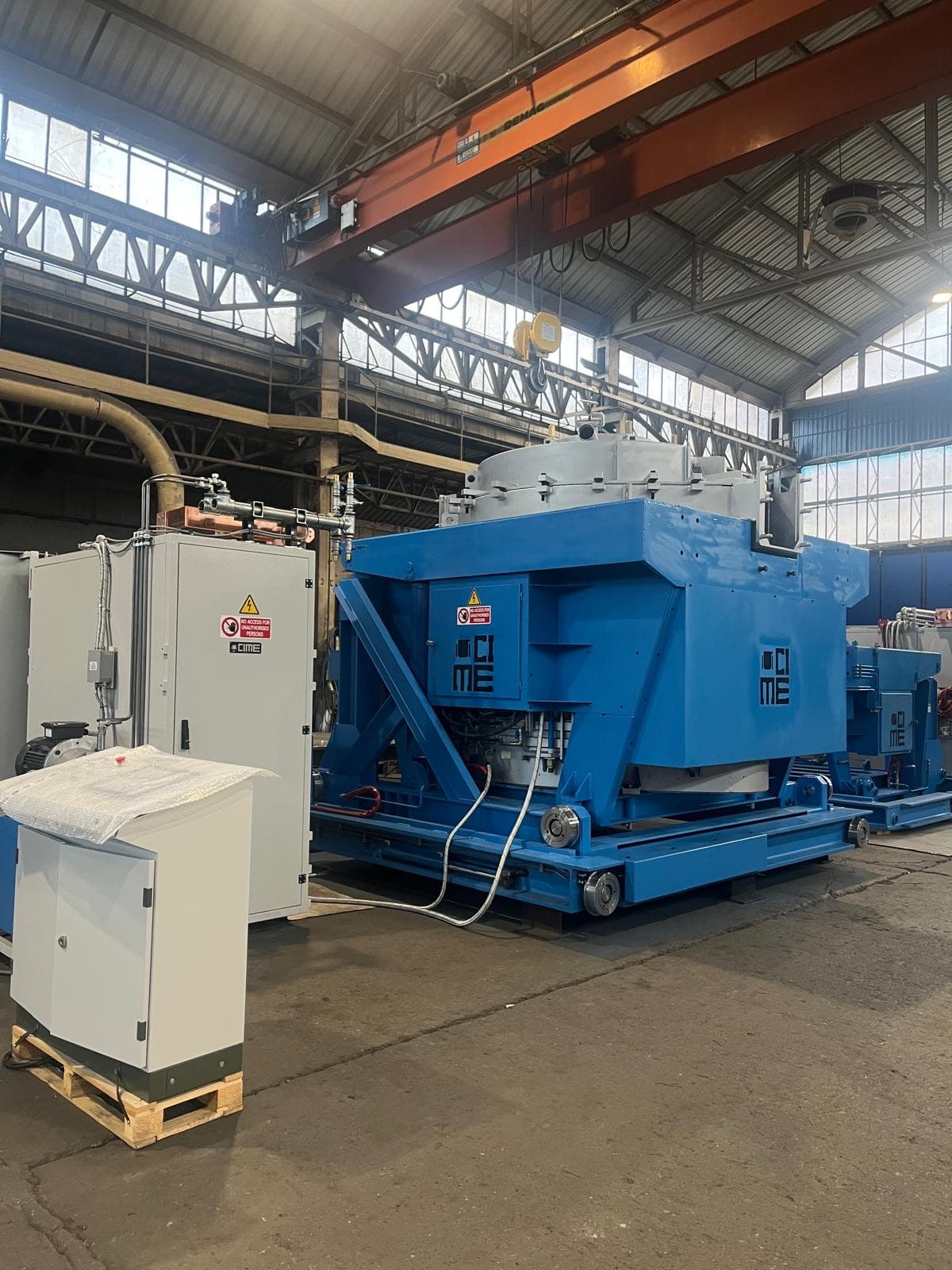
Behind every induction furnace is a converter that turns mains power into the medium-frequency current the coil needs. That converter comes in two generations. The older one uses SCR devices and regulates power by partializing the rectifier waveform. The modern one uses IGBT devices, rectifies the full three-phase wave and switches it cleanly. The furnace body can be identical; the converter is what decides how fast it melts, how much it costs to run and how clean a supply it draws. SCR came first and is still in service on many installed lines; IGBT is the medium-frequency technology every new converter is built on today.
The difference is not a detail on a datasheet. Which converter a foundry runs shows up in the melt time on its harder metals, in the energy bill at the end of the month, and in whether the utility ever complains about the quality of the power drawn. It is worth understanding what actually changes between the two.
Note
SCR regulates by voltage alone; IGBT regulates voltage and frequency. Many furnaces still run on SCR drives and they still work, but every new CIME converter is IGBT, from 1 to 8.5 MW.
What IGBT changes, and why it matters
Five things change when the converter is IGBT rather than SCR, and each maps to a number a foundry manager already watches.
Melt speed on tough metals. An SCR drive regulates by voltage; an IGBT converter regulates voltage and frequency, so it couples power into the charge reliably even as the metal changes state. On low-magnetic-permeability metals, stainless steel, copper and aluminium, that means faster melts with fewer burnt elements. On the floor it is throughput and yield on exactly the grades that are slowest to melt.
Energy efficiency. An IGBT converter runs more efficiently overall than the SCR drive it replaces, and it holds that efficiency across the power range rather than only at full output. Energy is the largest variable cost in melting, so every point of efficiency compounds over every tonne poured.
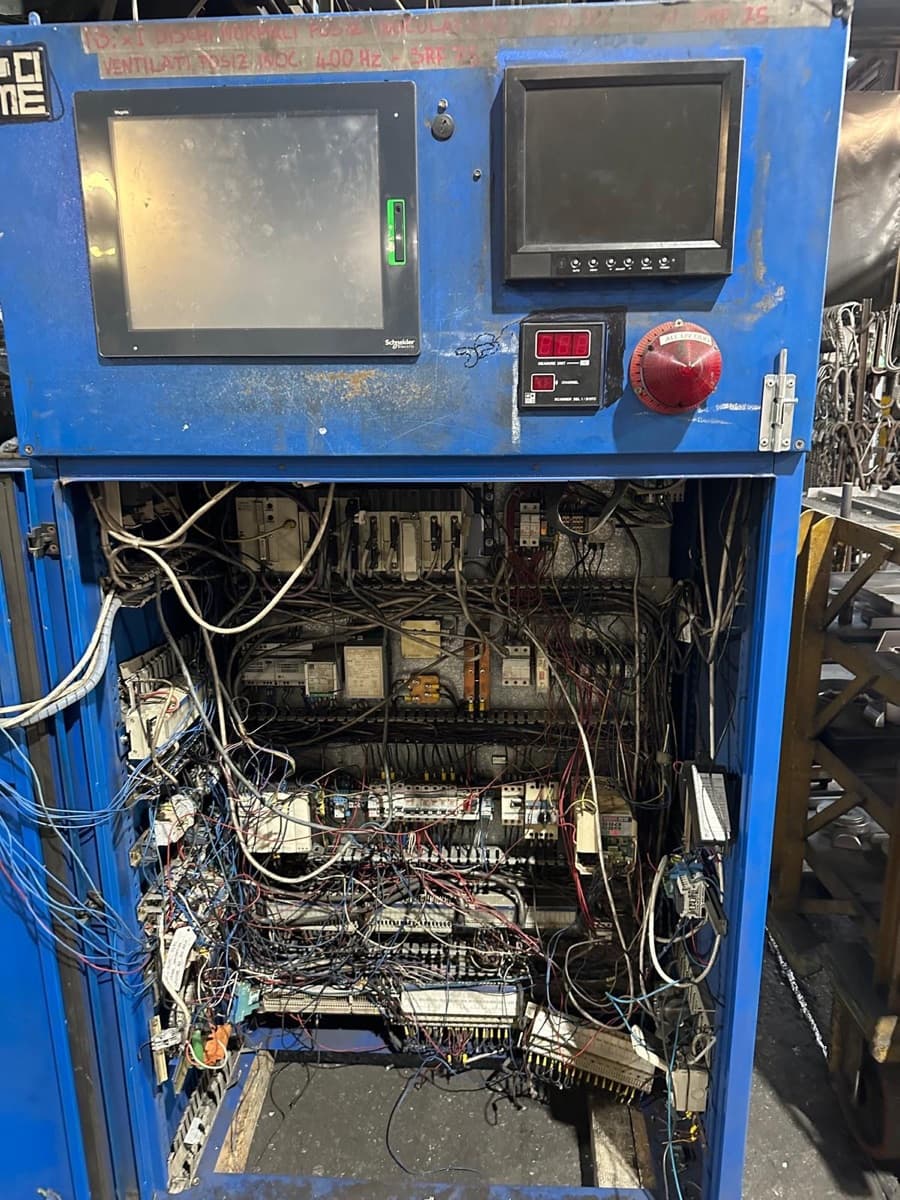
Grid power quality. An SCR converter has to partialize the rectifier to regulate the voltage, and that partializing is what generates higher harmonics, which pollute the supply and can disturb other equipment on the same network. An IGBT converter rectifies the full three-phase wave with no partializing, so the DC stays at its maximum and no higher harmonics are pushed back onto the grid. That protects neighbouring equipment and keeps the foundry clear of the power-quality penalties a utility can charge for a distorted supply.
Power factor. The IGBT converter holds a power factor above 0.95 at all times. The reactive power stays low, so the capacitor correction banks an SCR line needs disappear, together with their maintenance and the low-power-factor penalties a utility can apply.
Reliable start and constant power. IGBT technology starts to 100% even from cold at full load, and it holds output constant regardless of how much metal is in the crucible or how worn the lining is. Melt times stay predictable across the whole campaign instead of tailing off as the bath empties or the refractory thins.
Same coil, same crucible, two generations of converter. Rectify the full wave instead of partializing it, and the furnace melts faster, runs cleaner and costs less to feed.
At a glance
The same five changes, read as what a foundry gets from each converter. For the engineering side by side and how to move from one to the other, see SCR to IGBT retrofit.
New line or installed line
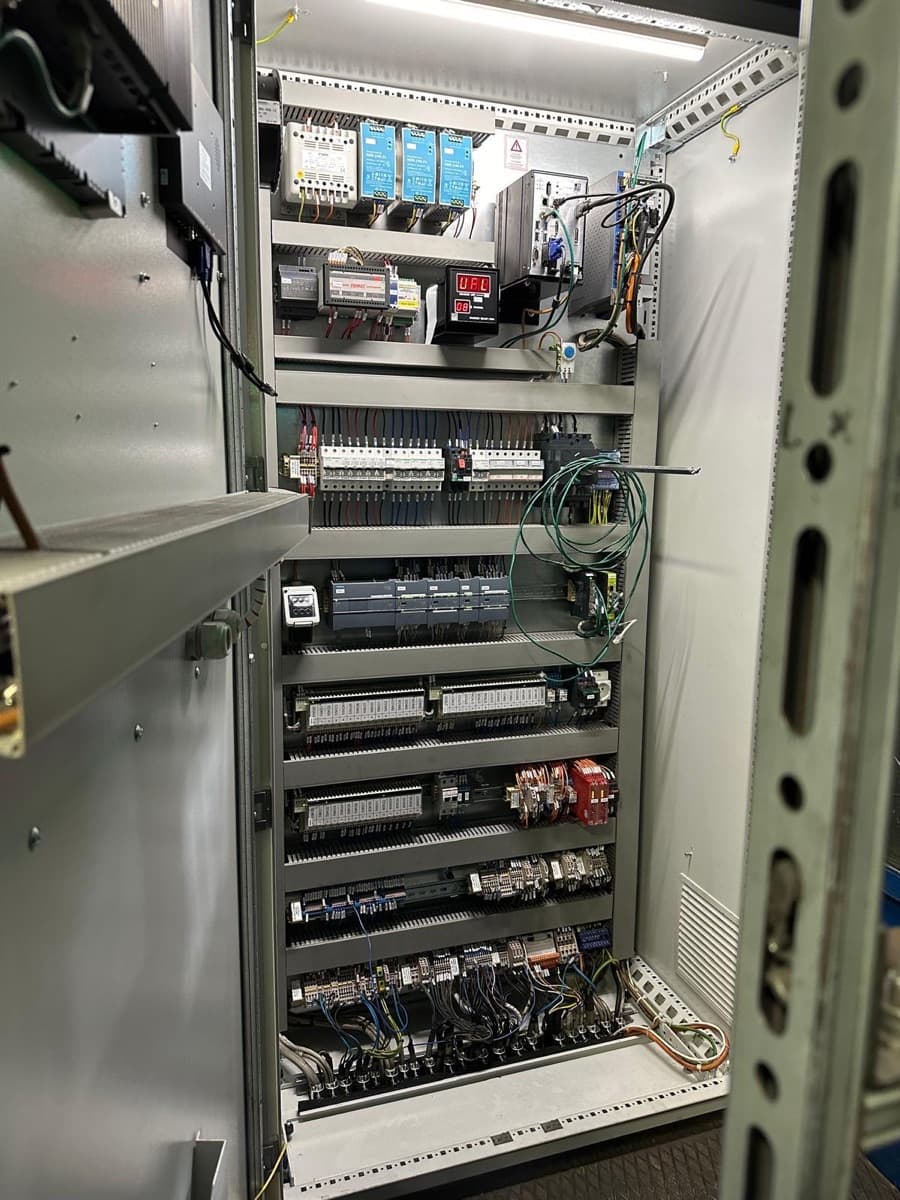
The decision splits two ways. For a new furnace, specify IGBT from the start: there is no reason to buy an SCR drive today. For an installed SCR line, the furnace itself is fine, so the move is not a new machine but a converter retrofit, keeping the body, coil and shop infrastructure and changing only the drive. Both routes reach the same modern performance.
The retrofit is the lower-capex path on equipment a foundry already owns, and it is where the efficiency, power factor and capacity come back without rebuilding the line. For exactly when and how to make that upgrade, see SCR to IGBT retrofit; for the converter itself, including the retrofit service, see the IGBT power supply, and for where it sits in the wider platform, the core technology.
Key point
The converter is the cheapest part of a furnace to modernise and the one that changes the most. Whether specified new or retrofitted onto an installed line, IGBT is what turns melt speed, energy and power quality in a foundry's favour.
Frequently asked questions
What is the difference between an IGBT and an SCR induction furnace converter?
An SCR converter regulates power by partializing the rectifier waveform, which controls voltage only and injects higher harmonics onto the grid. An IGBT medium-frequency converter rectifies the full three-phase wave and switches it cleanly, regulating both voltage and frequency. The result is faster melting of low-permeability metals, higher overall efficiency, a power factor above 0.95 with no capacitor banks and no higher harmonics.
Does an IGBT converter really melt faster than SCR?
On low-magnetic-permeability metals such as stainless steel, copper and aluminium, yes. An SCR drive regulates by voltage alone, while an IGBT converter regulates voltage and frequency, so power couples into the charge reliably instead of fading as the metal changes state. Melts are faster with fewer burnt elements. On easily coupled cast iron the gap is smaller but the efficiency and power-quality advantages remain.
Why does an IGBT converter not need capacitor banks?
An IGBT medium-frequency converter holds a power factor above 0.95 at all times, so the reactive power an SCR line has to correct with capacitor banks is simply not there. That removes the capacitor banks and their maintenance from the electrical room, and it avoids the low-power-factor penalties a utility can apply.
Should I choose IGBT for a new furnace or retrofit an existing SCR line?
For a new furnace, specify IGBT from the start. For an installed SCR line, you do not need a new furnace: retrofit the converter and keep the body, coil and shop infrastructure. Both routes reach the same modern performance; the retrofit is the lower-capex path on equipment you already own.
My SCR furnace still works, so is an upgrade worth it?
An SCR furnace does still melt, and there is no safety reason to change it. The case for IGBT is economic: faster melts on tough metals, lower energy per tonne, no capacitor banks and no harmonics on the grid. Because a retrofit keeps the body and coil and swaps only the converter, those savings usually pay back the upgrade without the cost of a new line.
References and sources
- Foundry Trade Journal, technical article on induction-furnace power supplies, 2006.
- Cast Metal Times, IGBT medium-frequency converters in coreless practice, 2004.
- CIME S.r.l., internal converter engineering documentation, Turin.