Key takeaways
- Ductile iron yield is lost mostly on the melt and pour side: magnesium fades, inoculation fades, dross forms and pours vary, and each one turns metal into scrap rather than castings.
- A heated, sealed bath held under nitrogen preserves magnesium so the iron stays nodular from the first cast to the last, instead of drifting out of spec while it waits.
- Late, in-stream ferrosilicon inoculation dosed at the pour keeps the nodule count up and the chill down, because inoculation added early fades before the metal reaches the mould.
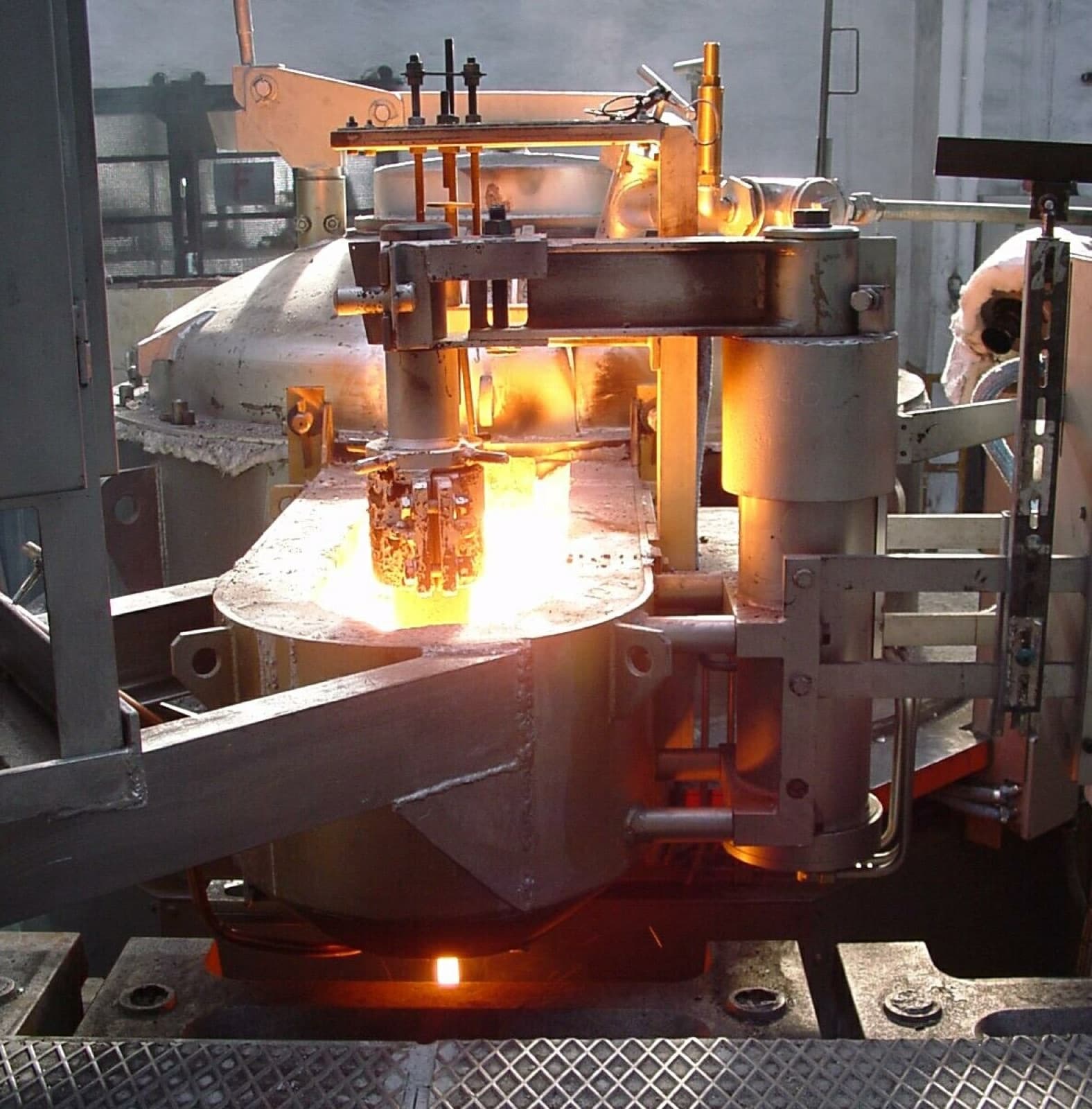
- A slagless, metered pour that fills every mould the same, and a furnace that empties fully, close the remaining gaps. CIME built the world's first automatic press-pouring furnace, coreless, in production since 1976.
What yield is, and where it goes
Yield is the share of melted metal that leaves the foundry as good castings. Some of the gap is design: the gating and risering that fill and feed a mould are metal that never becomes product, and that is a methoding question. The rest is process, and on ductile iron the process losses are large, avoidable and concentrated on the melt and pour side.
Ductile iron is unforgiving because it runs on two clocks. Magnesium, which makes the graphite nodular, fades from the moment treatment ends. Inoculation, which sets the nodule count and keeps the chill away, fades too. Add the dross that magnesium treatment generates and the ordinary variation of a hand pour, and every one of them can turn a good melt into a scrapped casting.
| Yield loss | What happens | The lever |
|---|---|---|
| Magnesium fade | Iron drifts out of spec, needs re-treatment | Heated sealed bath under nitrogen |
| Slag and dross | Castings rejected for inclusions | Slagless double-siphon pour |
| Inoculation fade | Chill and a low nodule count | Late in-stream ferrosilicon dosing |
| Pour variation | Short pours and overpour scrap | Metered stopper-rod, optical trim |
| Trapped heel | Metal that never becomes a casting | 100% back-tilt emptying |
Note
Read the table as clocks and leaks. Magnesium and inoculation are clocks that run down with time; dross, pour variation and a trapped heel are leaks that lose metal outright. Slow the clocks and plug the leaks, and yield rises without changing the casting.
Hold the chemistry: magnesium and inoculation
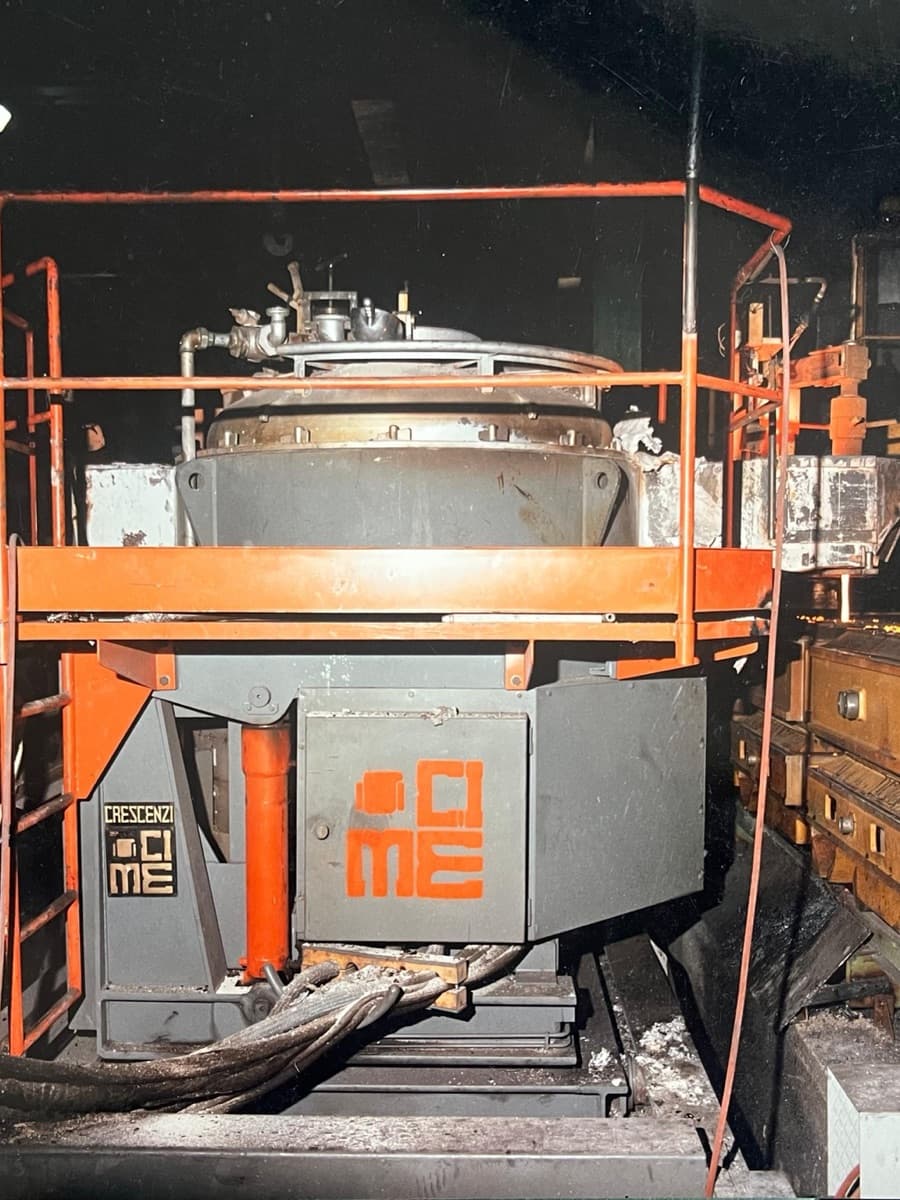
The first lever is to stop the magnesium clock. In an open ladle the treated iron cools and the magnesium fades, so a pour taken late is a pour taken out of spec, and the shop pays for a re-treatment or scraps the casting. A heated, sealed bath held under inert nitrogen slows that fade dramatically: the metal stays at temperature, away from air, so the magnesium is still there when the last mould of a run is filled. That is the core reason a press-pouring buffer suits ductile iron, set out in press-pouring, explained.
The second lever is inoculation, and its clock runs even faster. Ferrosilicon-based inoculant seeds the graphite so the nodule count stays high and the chill, the hard white iron that forms when nucleation is poor, stays away. But inoculation fades within minutes, so a dose added early in the ladle or the furnace is largely spent by the time the metal reaches the mould. The answer is to add it late and in the stream.
CIME does this with an automatic ferrosilicon-powder dosing system integrated with the CAP and the moulding line. An auger meters the inoculant precisely and repeatably against the process parameters, so each pour receives the right dose in-stream rather than a guessed handful early. Late, consistent inoculation means consistent nodularity, less chill and fewer castings scrapped for a low nodule count. The effect is clearest in thin sections and at edges, where a fading dose lets chill form first, so a steady late dose is what keeps those areas sound and cuts the grinding and scrap they otherwise cause.
Magnesium and inoculation are clocks. Hold the metal sealed and hot, dose the inoculant late in the stream, and both are still working when the mould fills.
Pour it the same every time
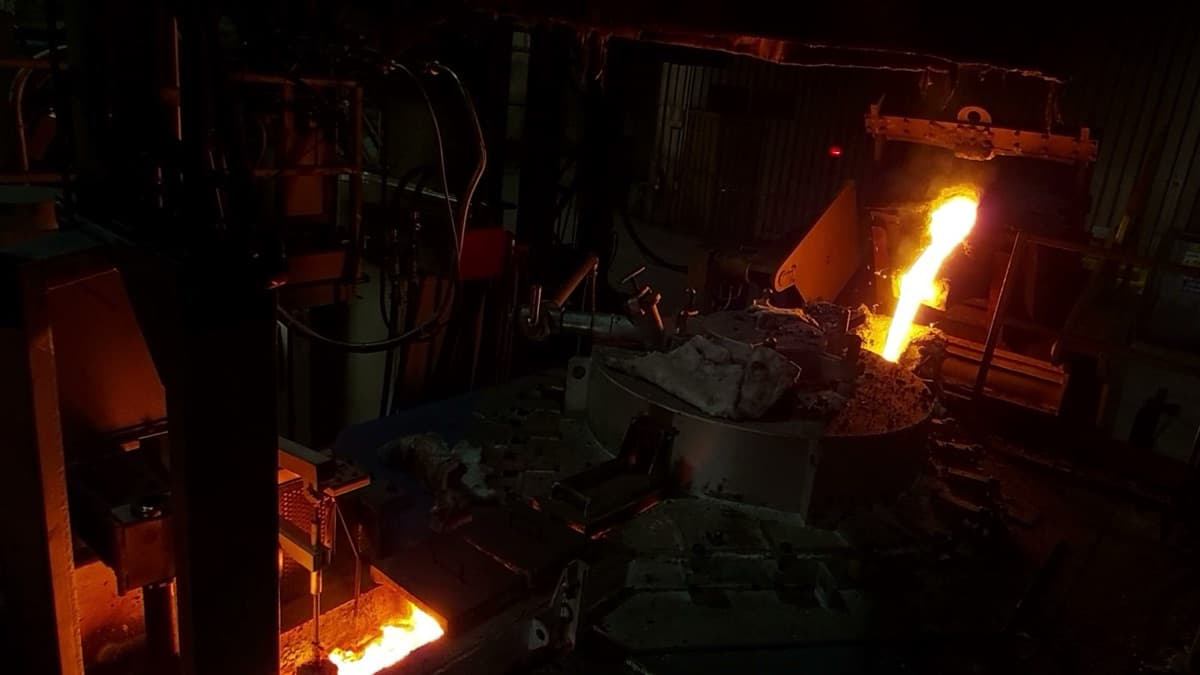
With the chemistry held, the remaining yield is lost at the pour itself, in two ways: dross that rides into the casting, and the ordinary variation of filling one mould heavier and the next lighter. A press-pouring furnace closes both. It pours through a double siphon that leaves slag and dross behind in the bath, so the stream that reaches the mould is clean, and it meters that stream with a stopper-rod, trimmed in real time by an optical system, so every mould is filled to the same weight. Short pours and overpour scrap both fall away. How that pour works is in press pouring vs ladle pouring.
The last of the metal matters too. A furnace that leaves a heel behind loses that metal from the yield entirely; the coreless CAP empties fully by back-tilting, so almost nothing is left trapped between casts or grade changes. See the CAP press-pouring furnace for the full specification, or the core technology for the coreless platform underneath it.
The whole-shop view
The melt and pour side is where a foundry recovers the yield it was losing to chemistry and the pour, but it is not the whole picture. Gating and risering decide how much of each pour becomes casting rather than return, and that is a methoding question a good foundry works on in parallel. The two meet at the returns: metal that comes back as gating, risering or scrap has to be remelted, and remelting it costs energy as well as yield, which is why yield and the energy bill move together. That link is in induction furnace energy consumption. Tracked as good castings over metal melted, shift by shift, all of this stops being theory and becomes a number that climbs as the chemistry and the pour are brought under control.
Key point
Ductile iron yield is not one number to chase but a set of clocks to slow and leaks to plug. Hold the magnesium, dose the inoculation late, pour it clean and constant, and empty the furnace fully, and more of every melt leaves as good ductile iron.
Frequently asked questions
Why is ductile iron yield harder to hold than grey iron?
Ductile iron depends on magnesium to make its graphite nodular, and magnesium fades as the metal waits, oxidising and reacting until the iron drifts out of spec. It also depends on inoculation, which fades too, and the magnesium treatment itself generates dross that can end up in the casting. Grey iron carries none of these clocks, so a late or inconsistent pour that grey iron tolerates can scrap a ductile iron casting.
How does a press-pouring furnace improve ductile iron yield?
It holds the treated metal in a sealed, heated bath under inert nitrogen, so magnesium fades far less than in an open ladle, and the iron stays nodular from the first cast to the last. The pour is slagless through a double siphon, so dross stays behind, and it is metered so every mould is filled to the same weight. Less re-treatment, fewer inclusion rejects and fewer pour faults all raise yield.
When should ferrosilicon inoculation be added?
As late as possible, because inoculation fades quickly once it is in the metal. Adding it early, in the ladle or the furnace, means much of its effect is gone by the time the metal fills the mould. A dosing system that meters ferrosilicon powder in-stream at the pour, tied to the moulding line, keeps the nodule count up and the chill down where it matters, at the mould.
What is the CIME inoculation system?
It is an automatic ferrosilicon-powder dosing system integrated with the CAP and the moulding line. An auger meters the inoculant precisely and repeatably against the process parameters, so each pour receives the right dose in-stream rather than a guessed handful early. Consistent late inoculation means consistent nodularity and less scrap from chill or under-inoculation.
What causes chill in ductile iron, and how is it avoided?
Chill is hard, brittle white iron that forms when the graphite has too few nucleation sites, usually because inoculation is weak or has faded. It shows up in thin sections and at edges, and it scraps a casting or forces extra machining. Keeping the nodule count high with late, in-stream inoculation is the main defence, together with holding the metal at a stable temperature rather than letting it cool and lose its response to treatment.
References and sources
- Foundry Trade Journal, technical article on ductile iron production and inoculation, 2006.
- Cast Metal Times, magnesium treatment and inoculation practice, 2004.
- CIME S.r.l., internal process documentation on CAP inoculation, Turin.