Key takeaways
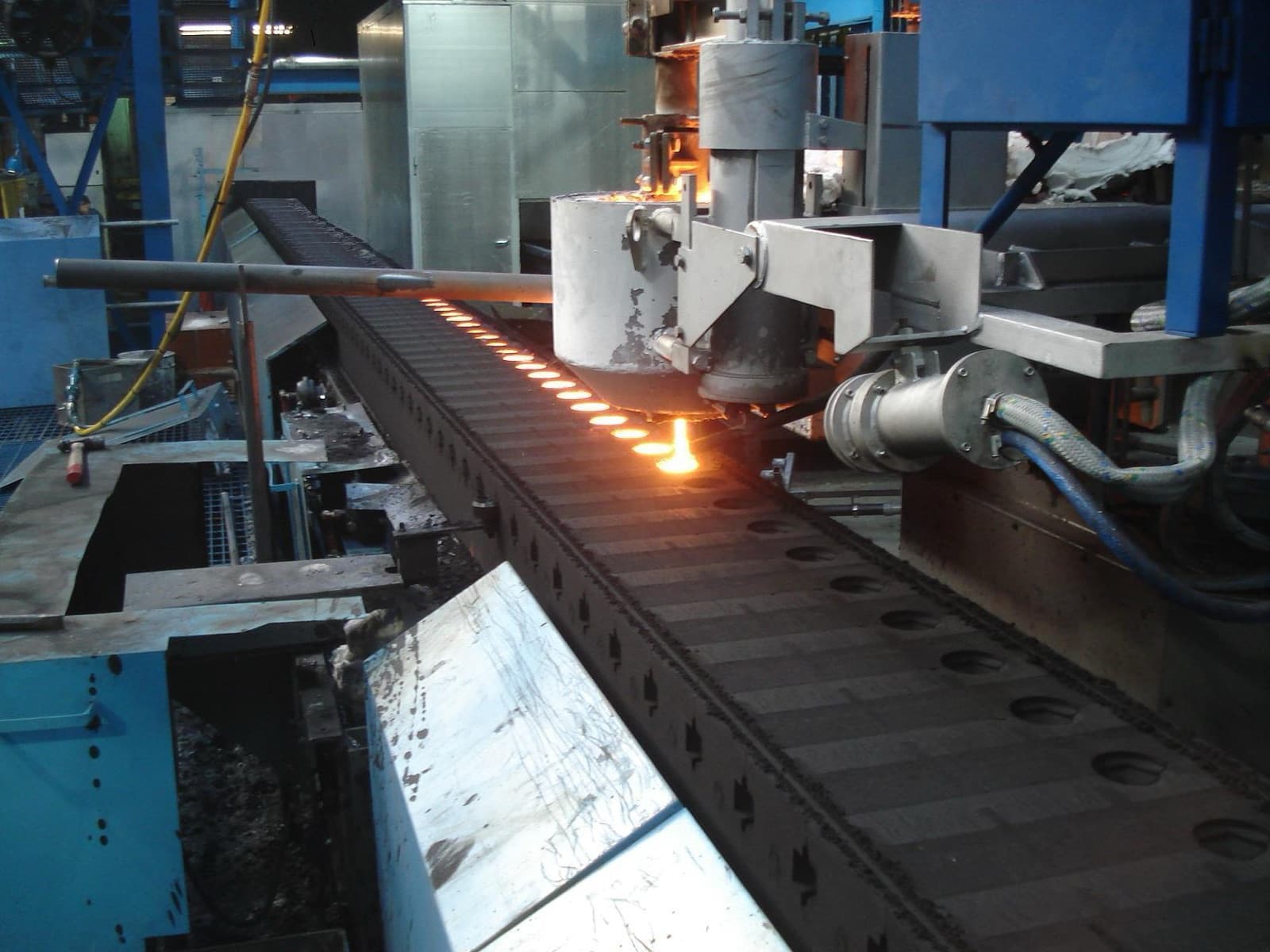
- An automatic pouring system fills every mould on a moving line to the same weight without an operator tipping a ladle, so scrap, labour and safety all improve over hand pouring.
- There are two families: an automatic pouring ladle, which tips a measured ladle, and a heated press-pouring buffer, which holds the metal sealed and hot and pushes a metered stream under inert pressure.
- Choose by the metal and the line first. Ductile iron on an automatic line needs a heated, sealed buffer that holds magnesium and temperature; grey iron at low volume can be served by a simpler ladle.
- The control layer decides repeatability: stopper-rod metering, closed-loop optical vision, auto-centering to the line, teach-in and real-time weighing keep every casting on weight. CIME builds the coreless CAP, the world's first automatic press-pouring furnace, since 1976.
What an automatic pouring system is
An automatic pouring system fills every mould on a moving line with molten metal without an operator tipping a ladle by hand. It meters the stream so the first mould and the last mould of a batch are filled to the same weight, and it keeps the pour aligned with the line as the moulds move. On a modern foundry that job is no longer a person with a ladle: it is a machine that pours the same way every time.
Foundries automate the pour for four reasons that compound: less scrap, because a metered stream fills consistently and keeps slag out of the casting; more throughput, because the pour keeps pace with an automatic moulding line instead of setting it; lower labour and better safety, because nobody stands over the metal; and tighter chemistry, because the metal is held ready instead of cooling and fading between casts. The question is not whether to automate, but which kind of system fits the metal and the line.
Put together, those gains are the payback case. Less scrap and higher yield mean more good castings from the same melt; steadier throughput means the pour stops setting the pace of the line; and holding the metal ready instead of remelting it saves energy every shift. A buyer specifies an automatic pouring system to move those numbers, so the useful question at each step below is which choice moves them furthest for a given metal and line.
Note
An automatic pouring system is not the melting furnace. It sits between the melt and the moulding line and delivers the pour. The choice is about how the metal is held and metered on the way to the mould, which is where scrap, chemistry and uptime are won or lost.
Two families of automatic pouring
There are two established ways to automate the pour. An automatic pouring ladle tips a measured ladle over each mould under program control: the vessel still cools and its slag still travels with the stream, but the tipping is automated. A heated press-pouring buffer does the opposite: it holds the metal in a sealed, heated furnace and pushes a metered, slagless stream out under inert nitrogen pressure, so the metal never waits and never sees air on the way out. The ladle is simpler and cheaper to install; the heated buffer costs more but does more, holding the chemistry and temperature that a tipping ladle cannot.
The two behave differently exactly where a foundry specifies against, and the full head to head lives in press pouring vs ladle pouring. For how a press-pouring furnace actually pours, from the sealed bath to the stopper-rod, see press-pouring, explained. This guide is about choosing between them, and specifying whichever one fits.
How to choose: a buyer's checklist
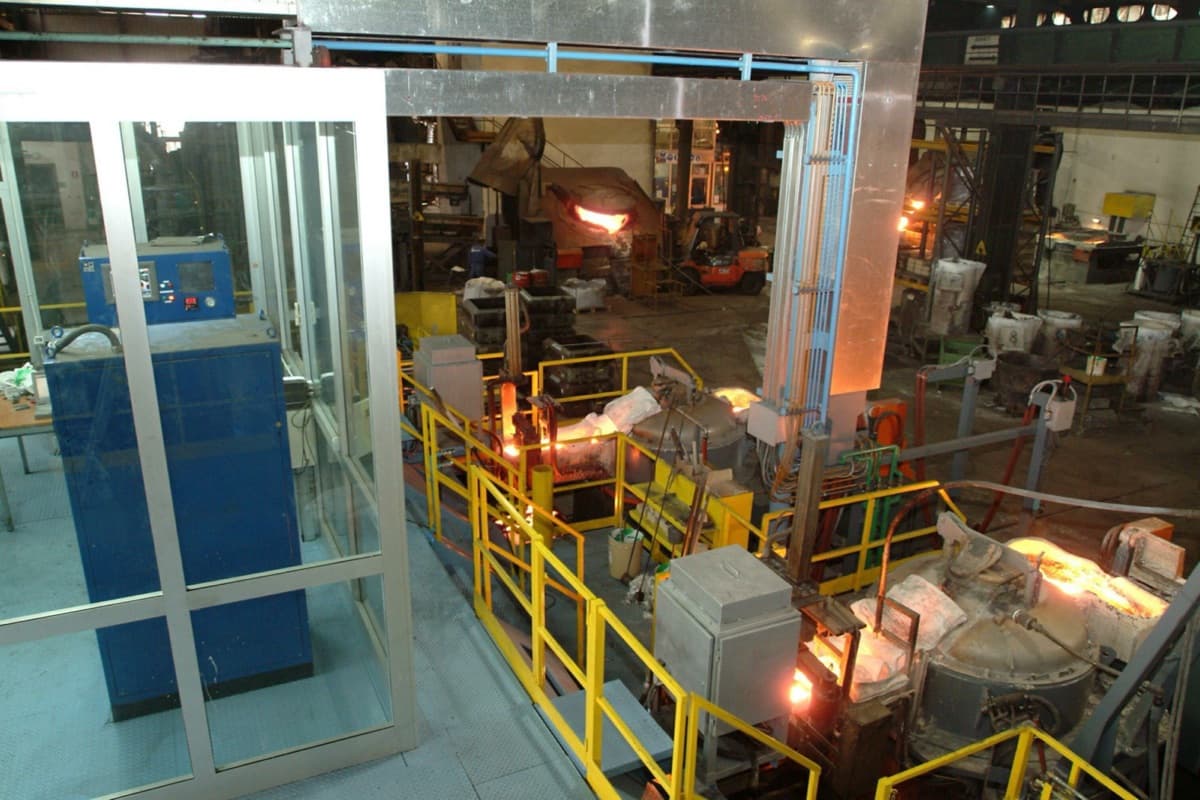
Specify from the process outward, not from the brochure inward. The order that matters is metal, line, then the controls that keep the pour repeatable. Seven steps decide the fit.
- Start from the metal. Decide by the alloy first. Ductile iron loses magnesium and picks up slag as it waits, so it needs a heated, sealed buffer under inert gas. Grey iron and steel are more forgiving and widen the options.
- Match the system to the line. An automatic moulding line, vertical Disamatic or horizontal, needs a metered, repeatable pour that fills every mould to the same weight. A low-volume or jobbing line may be served by a simpler automatic pouring ladle.
- Specify temperature control. A heated buffer holds the pouring temperature between casts and can superheat quickly for a grade change. An unheated ladle loses heat in transit and forces a hotter tap upstream, which costs energy and stresses the refractory.
- Specify pour control. Look for stopper-rod metering with a closed-loop optical vision system that reads the mould pouring cup and trims the flow in real time, so casting weight stays constant as the line varies.
- Specify automation and repeatability. Auto-centering to the moulding line and teach-in recording let the system repeat a validated pour mould after mould, without an operator riding the controls.
- Specify metal quantification. Real-time weighing of the bath lets the shop plan grade changes precisely and know exactly how much metal is left, instead of estimating from level.
- Specify emptying and flexibility. Confirm the furnace empties fully for a fast, clean alloy change with no ballast heel trapped inside, so one system can run several grades across a shift.
Specify from the process outward: the metal decides the family, the line decides the pour, and the control layer decides whether every casting comes out on weight.
The control layer: how a modern system stays repeatable
A pouring machine is only as good as the loop that keeps it on target. On the CAP, that loop escalates through three modes. Joystick is manual, for setup. Teach-in records one good pour and repeats it mould after mould. Optical closes the loop: CIME's High-Speed Optical Vision, a CIME-developed electro-optical control, monitors the mould pouring cup and the metal stream and signals the stopper-rod controller, which trims the pour in real time to suit every mould. The result is constant filling weight even as the line varies. Each mode is a step up in autonomy, from an operator setting the pour by hand to a closed loop that holds it without one.
Around that loop sit the systems that make the pour hands-off. Auto-centering reads the pouring position from the moulding line and moves the furnace to stay aligned, anticipating the mould before it settles. Real-time weighing tracks how much metal is in the bath so grade changes are planned, not guessed. Together they turn a furnace into a pouring system that holds temperature, meters the stream, follows the line and keeps every casting on weight, which is what the buyer is really specifying. For where this control layer sits in the wider platform, see the core technology.
Fitting it to your line
Specifying the system is half the job; fitting it to the shop is the other half. Three practical questions decide how cleanly an automatic pouring system drops into an existing line.
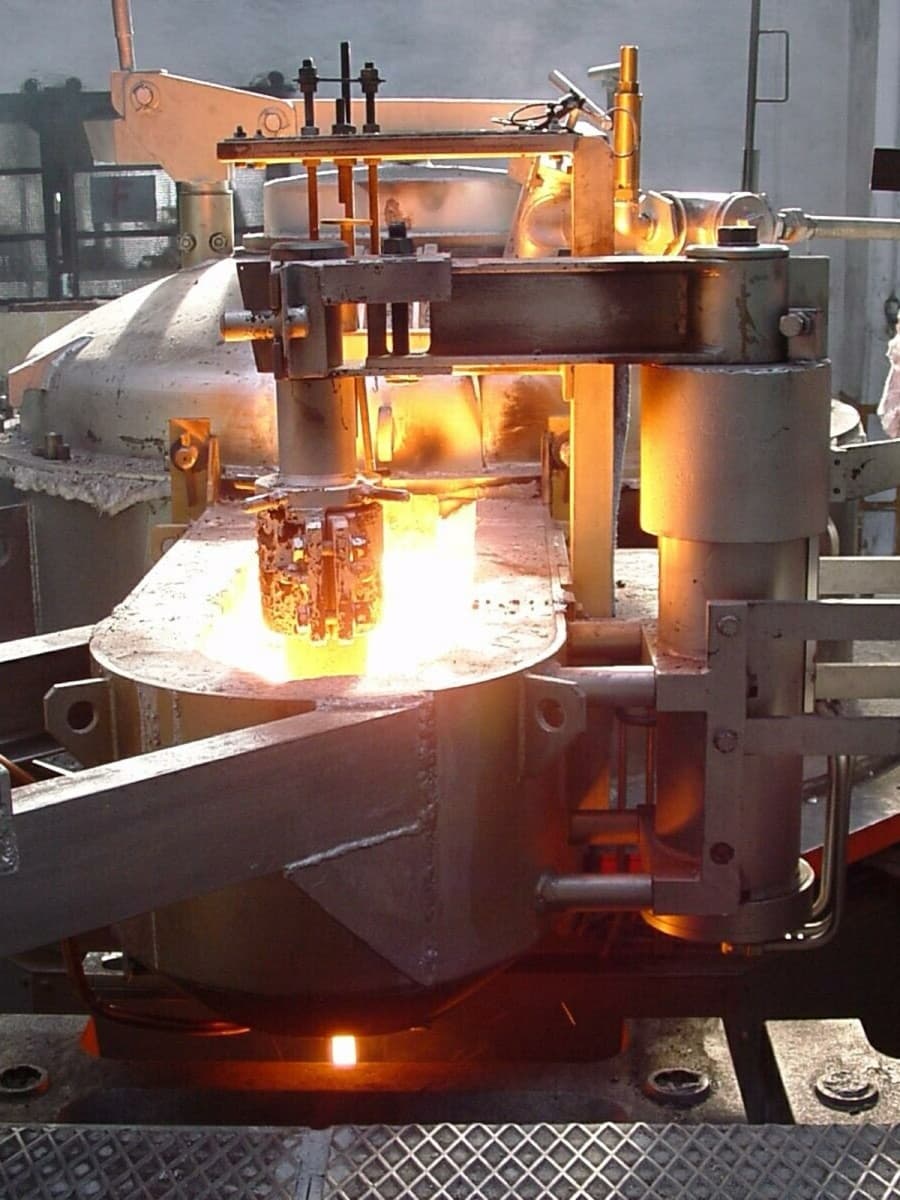
First, how the buffer is charged. A press-pouring furnace is refilled from the melting furnace between casts, by transfer ladle or by an automatic skip-loading system that lifts and tips the ladle into the sealed body under controlled motion, so the buffer stays topped up without interrupting the pour. A larger transfer ladle means fewer charging cycles and a steadier line.
Second, how the system talks to the moulding line. The pour has to follow the moulds, so the system takes the pouring position from the line and moves to stay aligned, and it starts, stops and meters in step with the line cycle. A clean controls interface to the moulding line, vertical Disamatic or horizontal, is what turns two machines into one automated cell.
Third, footprint and retrofit. A pouring system has to fit the existing layout and, often, an existing line, so the question is not only performance but whether it can be installed without rebuilding the shop. A modern system is engineered to sit on the line it serves, with the operator moved off the metal and into a control booth, and to be specified around the equipment a foundry already runs.
When a simpler system is enough
Not every line needs a heated, sealed buffer. A shop running short batches of grey iron at low daily tonnage, with frequent unrelated alloy changes on a single line, can be well served by an automatic pouring ladle: it automates the tipping without the cost of a heated furnace, and the chemistry demands are lighter. The heated buffer earns its place where the metal is demanding and the volume is steady, ductile iron on an automatic line above all.
Key point
Match the system to the process, not the process to the system. Specify the metal and the line first, then the controls that keep the pour repeatable, and the right family, ladle or heated press-pouring buffer, follows from there.
Frequently asked questions
What is an automatic pouring system?
An automatic pouring system delivers a controlled, repeatable stream of molten metal into each mould on a moving line without an operator tipping a ladle by hand. It meters the pour so every mould is filled to the same weight, and it comes in two families: an automatic pouring ladle that tips a measured vessel, and a heated press-pouring furnace that holds the metal sealed and hot and pushes it out under inert pressure.
How do I choose an automatic pouring system for my foundry?
Start from the metal and the line. Ductile iron on an automatic moulding line needs a heated, sealed buffer that holds magnesium and temperature, while grey iron at low volume can be served by a simpler automatic pouring ladle. Then specify temperature control, pour control (stopper-rod metering with closed-loop optical vision), automation such as auto-centering and teach-in, real-time weighing and full emptying for fast grade changes.
Do I need a heated buffer, or is an automatic pouring ladle enough?
It depends on the metal, the volume and the line. A heated press-pouring buffer holds the pouring temperature and preserves magnesium in ductile iron, and it fills every mould identically at high volume. An automatic pouring ladle is simpler and can suit short runs, low tonnage or less demanding grey iron, where a heated buffer is harder to justify.
How does an automatic pouring system keep every casting on weight?
A stopper-rod meters the flow while a closed-loop optical vision system reads the mould pouring cup and trims the stopper in real time, so filling stays constant even as the line varies. Auto-centering keeps the pour aligned with the moving moulds, teach-in repeats a validated pour, and real-time weighing tracks how much metal is left for precise grade changes.
Can an automatic pouring system be retrofitted to an existing moulding line?
Yes. A modern automatic pouring system is engineered to fit the line it serves, so it can usually be installed on an existing automatic moulding line without rebuilding the shop. What matters is the controls interface to the line, the charging route from the melting furnace, the available footprint and whether the metal and volume justify a heated buffer over a simpler ladle. Specify those, and the system is sized around the equipment the foundry already runs.
References and sources
- Foundry Trade Journal, technical article on automatic press-pouring, 2006.
- Cast Metal Times, coreless induction and pouring practice, 2004.
- CIME S.r.l., internal process documentation on CAP automatic pouring, Turin.